




































bySt. Jude Children's Research Hospital

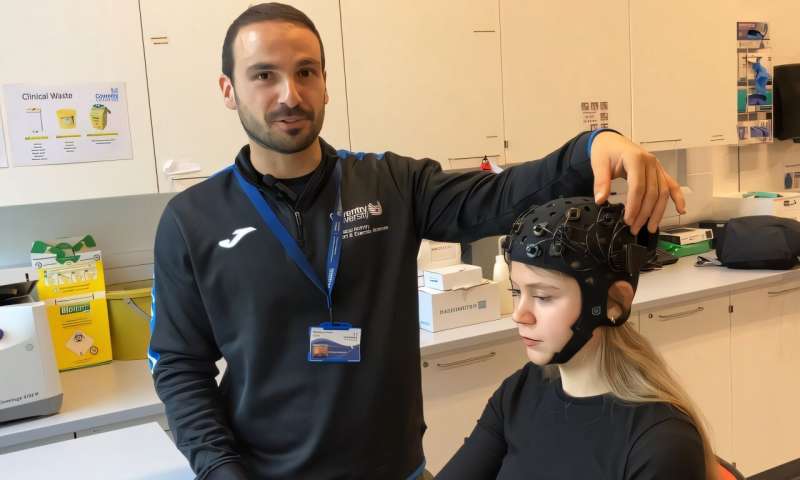
Aditi Bagchi, MD, Ph.D., St. Jude Department of Oncology, and international collaborators conducted a meta-analysis to identify prognostic factors in infant-type hemispheric glioma (IHG), providing insights to guide safer and more effective treatment strategies. Credit: St. Jude Children's Research Hospital
Clinician-scientists at St. Jude Children's Research Hospital and collaborators have conducted the largest study of infant-type hemispheric glioma (IHG) ever reported, uncovering key factors that could be used to guide treatment strategies for this rare pediatric brain tumor.
Combining new and previously published clinical andmolecular data, the study demonstrated that the prognosis of these patients is dependent on safe primary surgical resection, leading to complete removal of thetumor. The findings werepublishedtoday inNeuro-Oncology.
IHGs are aggressive brain tumors that occur during early infancy, usually between 0 and 12 months of age. They are often very large at the time of diagnosis, sometimes occupying over 50% of the cerebral volume. Molecularly, these large tumors are driven by unique alterations inreceptor tyrosine kinase(RTK) that lead to uncontrolled growth and proliferation of cells.
Historical publications show better overall survival of IHG in comparison to high-grade gliomas commonly diagnosed inolder childrenand adults. Despite better overall survival rates, primarytreatmentfailure rates and treatment-associated morbidity are high. Clinical research in the field has been stymied by the rarity of IHG, which has made large-scale studies of factors influencingclinical outcomesnearly impossible.
"IHGs are often misinterpreted as incurable at presentation, especially because of their large size and hemorrhagic characteristics ondiagnostic imaging, but that is not true," explained co-first and co-corresponding author Aditi Bagchi, MD, Ph.D., St. Jude Department of Oncology, Division of Neuro-Oncology. "With precise and timely management at diagnosis by an experienced team of pediatric neurosurgeons and neuro-oncologists, these tumors can be treated successfully."
To better understand the predictors of clinical outcome for IHG, Bagchi and her colleagues gathered clinical cases from 20 institutions across 11 countries. The researchers performed ameta-analysisusing data from 164 cases of IHG, creating the largest dataset ever reported for this tumor type.
"An analysis of this size for IHG has never been published before," said Bagchi. "Because this tumor is so rare, no single center sees hundreds of cases, so pooling data worldwide was essential."
The study identified two major factors that improve survival for children with IHG. First, achieving a complete surgical resection is critical for long-term outcomes. Second, surgery should be followed by cancer-directed adjuvant treatment to improve outcomes further. These findings lay the foundation for successful treatment. However, the study also showed that early surgery in infants was fraught with risks of bleeding and early oncologic death.
The study reports that making neurosurgical decisions at the time of diagnosis is often difficult, not only because IHGs tend to be large and prone to bleeding, but also due to the patients' extremely young age and low body weight.
"We need strategies that minimize surgical morbidity while maintaining the success of complete resection," emphasized Bagchi.
By sharing these insights, the authors hope to guide future treatment strategies and inspire continued collaboration to improve care for children affected by IHG.
"What makes this study truly remarkable is the level of international collaboration," said Bagchi. "We are incredibly grateful for our collaborators, especially the University of Geneva. This study would not have been possible without this combined effort."
Bagchi is working to build on the insights from this meta-analysis to launch a clinical trial testing strategies that could make primary surgery safer and more effective for IHG using molecularly directed treatment approaches. These efforts serve as an important bridge between research and practice and lay the foundation for improved treatment of this rare tumor.
More information: Lara Chavaz et al, A Systematic Study of Molecular Diagnosis, Treatment and Prognosis in Infant-Type Hemispheric Glioma): An Individual Patient Data Meta-analysis of 164 patients, Neuro-Oncology (2025). DOI: 10.1093/neuonc/noaf264
Provided by St. Jude Children's Research Hospital








Post comments