

































byCoventry University
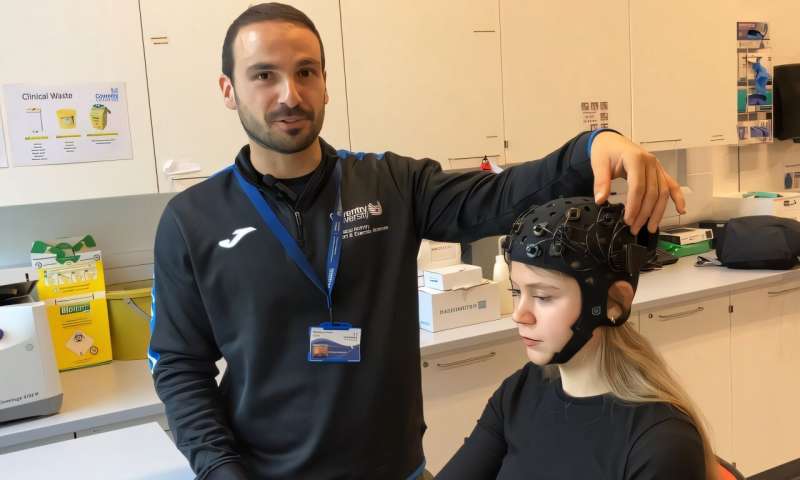
Dr Ricardo Martins explains how the FNIRS cap works. Credit: Coventry University
A new study by researchers at Coventry University has found a high-intensity gym workout appears to increase your ability to focus, remember and process information in your brain.
The research, conducted by Dr. Ricardo Martins from Coventry University's Research Center for Physical Activity, Sport and Exercise Sciences, showed that higher intensity exercise sessions were also more effective than less intensive sessions.
As part of the work, 42 active,young adults(18–35 years old) were divided into three groups, either taking part in high or moderate intensity resistance exercise or no exercise at all.
In theexercise groups, each participant was asked to do cognitive tasks testing working memory and self-control/attention prior to their workout, while wearing a near-infrared spectroscopy cap (FNIRS) a headcap designed to measure oxygen levels in different parts of the brain.
Immediately post and 45 minutes after exercise, participants repeated the working memory and self- control/attention tests, again wearing the FNIRS cap.
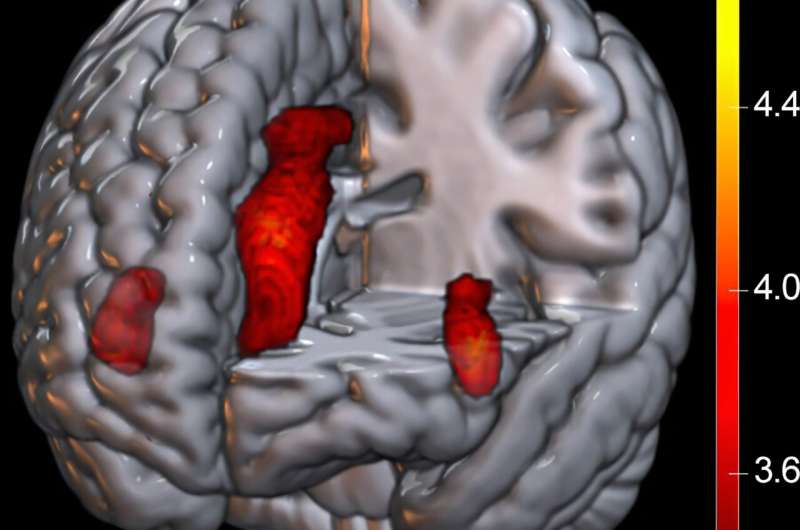
The results,publishedinBehavioural Brain Research, found that in the exercise groups, participants had higheroxygen levelsin the parts of their brain associated withworking memoryandself-control/attention post exercise, indicating the brain was more active following exercise, especially following higher intensity exercise.
Dr. Martins said, "We found that both intensities of exercise, compared to rest, led to increased cognitive performance and higher brain activation; however, high intensity exercise seems to be more effective, particularly when the cognitive tasks are more demanding. As high intensity exercise leads to a bigger benefit in comparison to moderate exercise, this could be used as a recommendation if we need to improve our cognitive performance or perform better academically or professionally.
"In the future, we want to implement this research into schools. We want to understand the effects of classroom exercise breaks and how they might help children to perform better academically.
"Our research doesn't yet look at long-term effects, but this current study represents a big step forward in trying to demonstrate the underlying mechanisms that might be responsible for cognitive improvement following exercise. This is an acute study looking at the effects immediately pre and post exercise as a starting point to explore thelong-term effectsof exercise in the brain."
More information: Ricardo Martins et al, Acute resistance exercise load modulates brain haemodynamics, working memory, and inhibitory performance, Behavioural Brain Research (2026). DOI: 10.1016/j.bbr.2025.115887 Journal information: Behavioural Brain Research
Provided by Coventry University








Post comments