




































byUniversity of Bonn
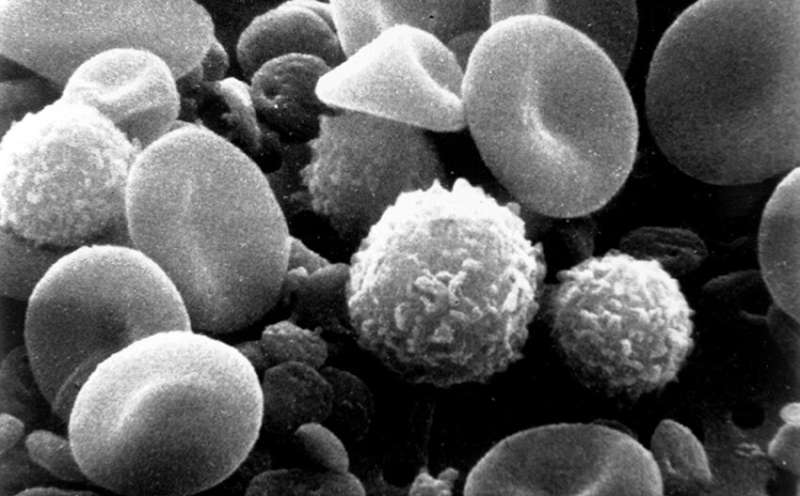
Myeloid immune cells alongside red blood cells in an electron micrograph of human blood. Credit: National Cancer Institute
Myelin oligodendrocyte glycoprotein antibody-associated disease (MOGAD) is a rare autoimmune condition in which the body's immune system mistakenly attacks the protective myelin sheath of nerve fibers in the central nervous system. Although MOGAD induces symptoms similar to multiple sclerosis (MS), its underlying biology appears to be fundamentally different. Understanding these distinctions is crucial for developing effective, disease-specific treatments.
A new international study under the contribution of ImmunoSensation2 member Prof. Anne-Katrin Pröbstel and her team now sheds light on these immune differences. The results have beenpublishedinScience Translational Medicine.
Myelin oligodendrocyte glycoprotein antibody–associated disease (MOGAD) is an autoimmune disease that shares symptoms with other demyelinating conditions, such as multiple sclerosis (MS). Like MS, MOGAD can cause inflammation of the optic nerve andspinal cord, potentially resulting in long-term disability.
However, despite clinical similarities, MOGAD is driven by a distinct pathophysiology. This difference is thought to underlie the limited effectiveness of current immunomodulatory treatments that are otherwise used successfully in MS. Yet, studies exploring the underlying disease mechanisms have been scarce—until now.
A collaborative team of researchers from the Universities of Zurich, Munich, Toulouse, Lyon, Basel and Bonn has provided important new insights into the rare disease. The researchers performed detailed immune-cell profiling of MOGAD patients, comparing the results with data from individuals with MS and healthy controls.
The analysis revealed striking differences across multiple immune-cell subsets, including natural killer (NK-), T-, and B-cells. These findings demonstrate that MOGAD is characterized by a unique immunological signature that sets it apart from MS and other neuroinflammatory diseases.
"These findings support MOGAD as its own disease entity, distinct from other neuroinflammatory conditions such as MS," explains Prof. Dr. Pröbstel, managing director of the Department of Neurology at the University Hospital Bonn (UKB), Member of the ImmunoSensation2 Cluster of Excellence at the University of Bonn and research group leader at the German Center for Neurodegenerative Diseases (DZNE).
While MS therapies have long relied on broad immunomodulation, patients with MOGAD often respond poorly to these established treatments. Prof. Pröbstel and colleagues now provide a detailed map of the immune landscape in MOGAD, offering crucial clues for future therapeutic approaches.
"Importantly, this work lays the foundation for hypothesis-driven research aimed at understanding MOGAD's unique immunopathology and developing targeted therapies," adds Prof. Pröbstel.
By defining how immune cell populations differ between MOGAD and MS, the study paves the way for a more personalized approach to treating neuroinflammatory diseases. Before application inmedical practice, the hypotheses developed on the basis of the profile data obtained must be validated inclinical studies.
More information: Jonas Schmid et al, Immune signatures link myelin oligodendrocyte glycoprotein antibody–associated disease to other autoantibody-mediated conditions, Science Translational Medicine (2025). DOI: 10.1126/scitranslmed.adw0358 Journal information: Science Translational Medicine
Provided by University of Bonn











Post comments