



































byAmerican College of Surgeons
Credit: CC0 Public Domain
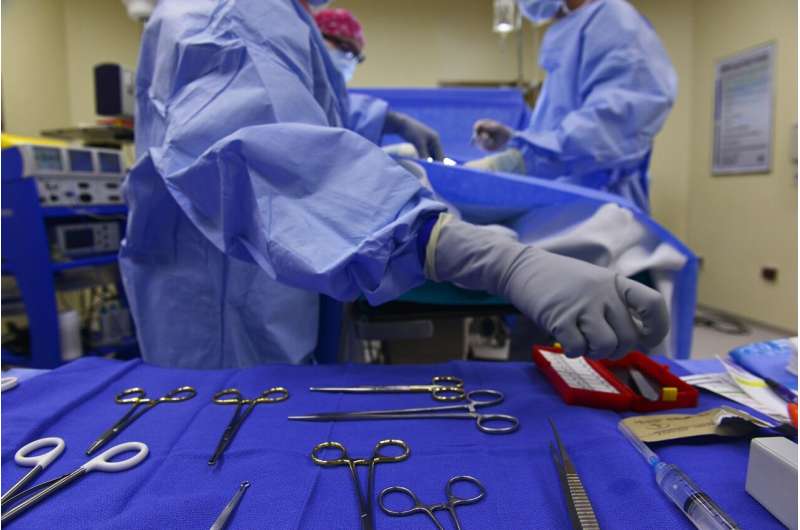
More adults are surviving both the wait for an organ and transplant surgery, but the number of people who need transplants continues to exceed the number of organs available, especially for kidneys, according toa national analysispublished in theJournal of the American College of Surgeons.
Researchers from Baylor College of Medicine in Houston, Texas, analyzed nearly 1.5 million listings of adults in the United Network for Organ Sharing (UNOS) database from January 1987 to July 2024, marking one of the most comprehensive analyses of long-term trends in adult solid-organ transplantation to date. Their analysis focused on three key metrics:
"These metrics are important because they provide a comprehensive snapshot of how well the system is keeping up with demand," said first author Carter Burns, a second-year medical student at Baylor College of Medicine in Houston, Texas. "A lot of research focuses on the perioperative period, but a patient's experience with transplantation begins the moment they are waiting for an organ."
About 13 people die every day waiting for a transplant, and more than 100,000 adults and children are waiting for an organ, according to the Health Resources & Services Administration. With growing demand,a record 49,064 transplantswere performed in 2025.
Study results
Survival has improved across all solid organs: one-year survival after listing (intent-to-treat survival) increased substantially in the study period. The largest gains in survival were seen for lung transplantation, rising from 38% to 84% across almost four decades. Other substantial gains were seen in heart transplantation (63% to 90%), liver (70% to 85%), kidney (82% to 95%), and pancreas (84% to 95%).
One-year post-transplant survival also improved across all organs. Inkidney transplants, post-transplant survival was consistently higher for living donor transplants compared to transplants from deceased donors.
Unmet need is decreasing for most organs, but large gaps still persist: despite survival gains, the number of patients needing transplants continues to outweigh supply, though the gap is narrowing for many organs. From the late 1990s to 2023, there was about a 40% reduction in the unmet need for liver transplants, roughly a 50% reduction in the unmet need for heart and pancreas transplants, and about an 80% reduction in the unmet need for lungs.
Kidney donations are in highest demand: kidney transplant had the highest and most persistent unmet need, increasing roughly 350–400% in the past three decades, from about 4,000 patients with unmet need in 1988 to about 18,500 in 2023. Demand has remained persistently high, even after a slight decline from peak levels in the early 2010s.
"Organ transplant patients are living longer both before and after surgery thanks to several clinical and technical innovations," said senior author Abbas Rana, MD, FACS, professor of surgery at Baylor College of Medicine. "But there remains a significant need for organ donations, and that unmet need hampers any progress we have made in survival."
Progress in organ transplantation surgery
The improved survival rates likely reflect advances inanesthesia, critical care medicine, and infectious disease medicine, which have improved survival after organ transplantation and allowed people on the organ transplant waitlist to live longer, the authors noted. Better organ preservation strategies and expanded donation criteria have also played a critical role in increasing access, though these effects aren't always consistent across all organ types.
Other emerging technologies, such as xenotransplantation, have shown some promise in limited clinical trials but are not yet widely available or sufficiently developed to meaningfully address the gap between organ supply and demand, the authors noted.
"Our field has made tremendous advancements, but those advancements can only be truly realized with increased donations," Dr. Rana said. "This research was another way for us to highlight just how influential and significant the organ supply is to maintain progress."
The study is limited by the UNOS database, which may not fully capture regional differences, proximity to transplant centers, or more detailed socioeconomic factors of patients. The analysis also did not account for changes in transplant eligibility criteria or donor and recipient risk factors, which may have influenced the findings, the authors noted.
Study co-authors are Pradyun V. Sangineni, BS; Spencer E. Myres, BS; James A. Widner, BS; Marco A. Campioli, BA, and John A. Goss, MD, FACS.
Publication details Carter J Burns et al, Trends in Survival and Unmet Need Across Solid-Organ Transplantation, Journal of the American College of Surgeons (2026). DOI: 10.1097/xcs.0000000000001852 Journal information: Journal of the American Chemical Society , Journal of the American College of Surgeons








Post comments