


































by Amy Quinton,UC Davis
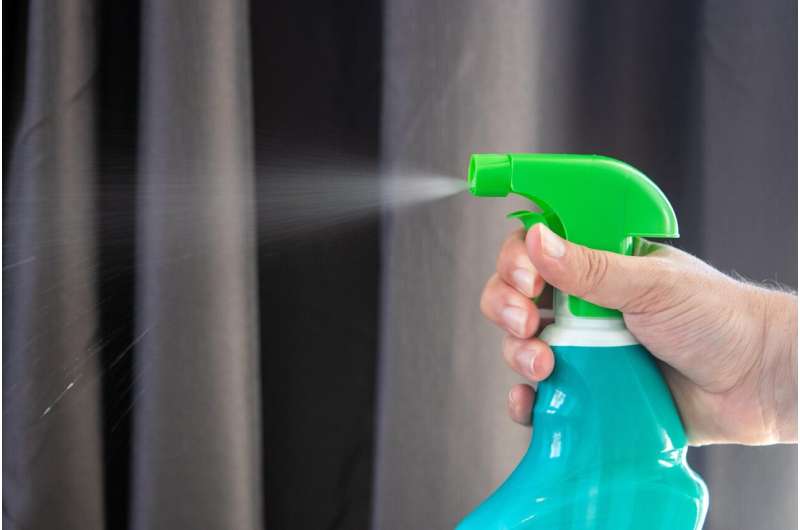
Credit: Pixabay/CC0 Public Domain
Breathing in common disinfectant chemicals known as quaternary ammonium compounds, or QACs, may be far more harmful than swallowing them, according to amouse studyled by researchers at the University of California, Davis. The study found significant lung injury at blood QAC exposure levels similar to those measured in humans.
The findings raise questions about whether airborne exposure from disinfectant sprays and cleaning products could contribute to respiratory disease such as asthma or chronic obstructive pulmonary disease (COPD). The study was published inEnvironmental Science & Technology.
"The surprising result of this study was that these compounds, when inhaled, caused 100-fold more lung injury and 100-fold more lethality compared to oral ingestion," said lead author Gino Cortopassi, a biochemist and pharmacologist with the UC Davis Weill School of Veterinary Medicine.
Widespread use and growing concerns
Quaternary ammonium compounds have been widely used as disinfectants since the 1940s, under trade names Lysol and Roccal. Whilenot very volatile, meaning they don't make fumes by themselves, they are commonly used in disinfectant sprays, which can enter the lungs. The compounds are also found in some herbicides, eye drop disinfectants, nasal sprays, mouthwash, dryer sheets and fabric softeners.
While it was once thought that these compounds wouldn't make it into the bloodstream, in 2021, Cortopassi and colleagues found that80% of study participantshad detectable concentrations of QACs in their blood. They also observed that those participants with the highest total QAC levels in their blood had the lowest levels of energy in their mitochondria, the parts of the cells that produce energy. Since QACs do not penetrate the skin or gut well, researchers thought breathing in QACs might explain why the chemicals were showing up in human blood.
Link to human exposure
The new study found when mice breathe in QAC doses at levels that harm their lungs, the amount of these chemicals that ends up in their blood is similar to QAC levels found in human blood. This suggests that breathing in these chemicals—such as from spray cleaners—may be one way they enter the human body.
"We have to question whether we really want to have all of these QAC-based disinfectant sprays in the environment given their proven lung toxicity in mice," Cortopassi said.
Other authors include Lauren Adcock, Claire B. Montgomery, Sepehr Barkhordari, Sandipan Datta and Laura Van Winkle of UC Davis; Kyoungmi Kim of UC Davis Health; and Ryan Seguin and Libin Xu of the University of Washington.
Publication details Lauren Adcock et al, Differential and Sex-Specific Toxicity of Aspirated Quaternary Ammonium Compounds, Environmental Science & Technology (2026). DOI: 10.1021/acs.est.5c13204 Journal information: Environmental Science and Technology , Environmental Science & Technology









Post comments