


































Credit: Jsme MILA from Pexels
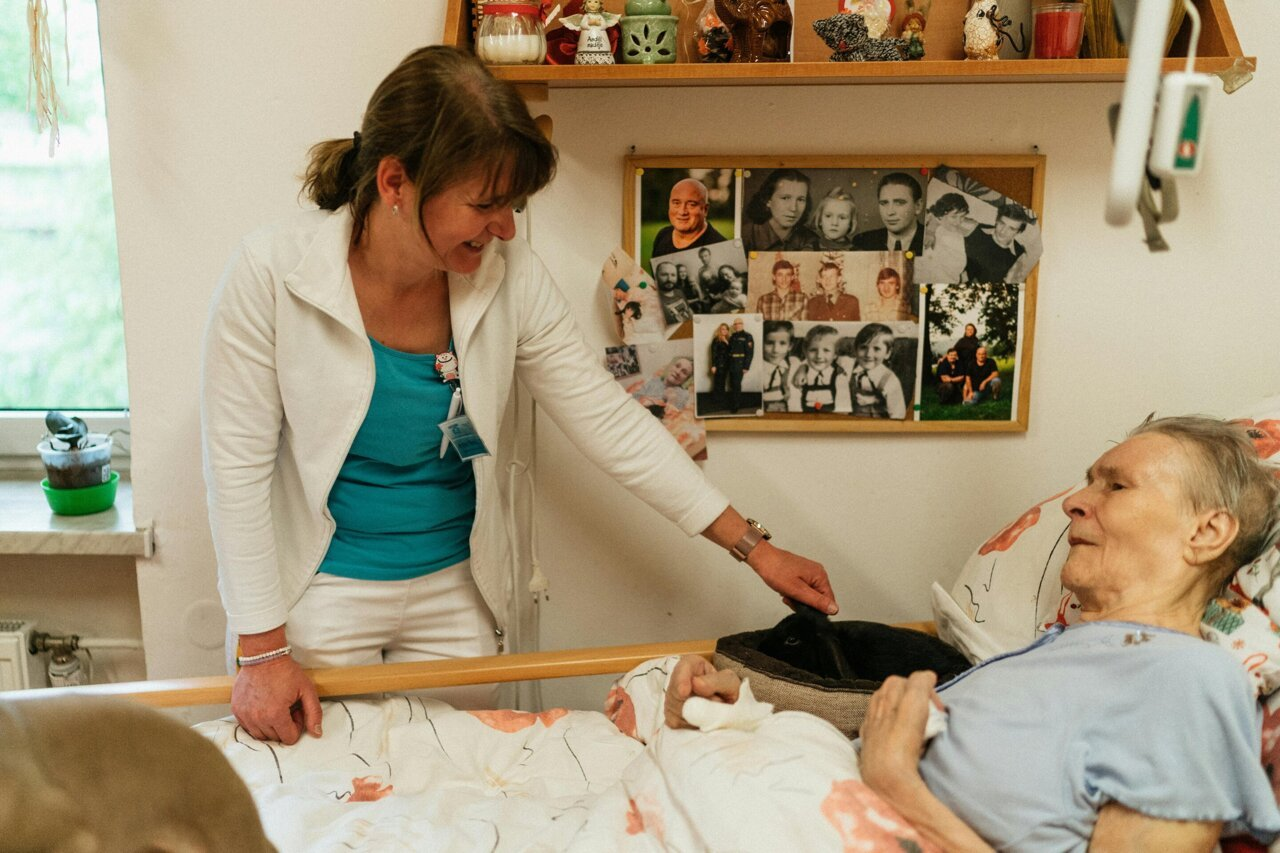
A team including researchers from the University of Tokyo found that the distance between family caregivers and the people they care for can affect how caregivers reflect on stressful experiences. When caregivers engage in therapeutic writing soon after a stressful event or while they are with the person they care for, they tend to focus their writing on emotional expression or on the care recipient.
Waiting for some time, moving to another space or handing over care to someone else can help caregivers take a more objective view and even work through problems. The researchers used a smartphone app to examine how timing, physical surroundings and caregiving responsibilities affected the caregivers' reflective writing.
Family caregivers can experience considerable stress, clouding their ability to look after their own mental well-being. Reflective writing, focused writing about stressful experiences, can help people process these experiences, and it's a relatively well-established activity.
University of Tokyo professor Koji Yatani, graduate student Shunpei Norihama and their team at the university's Interactive Intelligent Systems Laboratory noticed a potential flaw in some common digital methods for helping caregivers with their reflective or disclosure writing.
"Existing digital tools often expect caregivers to follow a fixed schedule or simply write something when they feel stressed. But anyone caring for a family member knows that you can't just stop what you are doing to write a diary entry when dealing with a crisis," said Yatani.
"We started this project to understand how a caregiver's situation and surroundings might affect how they reflect on stressful experiences, and we set up tests to explore this."
Their study, published in the journal Proceedings of the ACM on Interactive, Mobile, Wearable and Ubiquitous Technologies, involved 47 family caregivers who used a custom smartphone app called Experience Sampling Method (ESM) over three weeks.
The application prompted participants to write about recent stressful caregiving experiences while recording how much time had passed since the event, whether they were physically close to the person they cared for at the time and whether they had handed over care responsibilities to someone else for any period of time.
The team found that when caregivers wrote immediately after stressful moments or while they were with the care recipient, they tended to express and release their emotions, and they also wrote about their care recipients. Conversely, when the caregivers waited for some time or moved to a different room or role before writing, they were more likely to calm down, view the situation objectively and even write about solutions to their problems.
"One of the hardest parts was going through all 958 ESM entries collected and categorizing them. We assigned 5,412 labels to describe what participants were writing about and how their reflections developed," said Norihama.
"It took a long time because we had to read each entry carefully and look at how the meaning and focus changed. Instead of using simple measures, such as the number of words people wrote, we looked at what they were actually saying and how their reflections changed depending on their distance from the person they cared for."
The researchers also found that simply asking caregivers to record their distance and surroundings may help them notice how their environment affects their stress and calmness. They hope these findings will encourage caregivers to recognize when they need to step away from a stressful situation and give themselves time to recover before trying to solve a problem.
"We learned that being close to or far from the person you care for is not necessarily good or bad for your own reflection. Proximity seems to change what caregivers need from reflection. Being close can give them a chance to express their emotions and release frustration, while having some distance can help them look at the situation more calmly and think about what to do next," said Yatani.
"We hope this helps us move away from the idea that there is a correct time or right way for caregivers to reflect, and instead understand that different situations may call for different kinds of reflection."
More information: Shunpei Norihama et al, Two Modes of Reflection: How Temporal, Spatial, and Social Distances Affect Reflective Writing in Family Caregiving, Proceedings of the ACM on Interactive, Mobile, Wearable and Ubiquitous Technologies (2026). DOI: 10.1145/3831973
Provided by University of Tokyo
Source: MedicalXpress
Original article: https://medicalxpress.com/news/2026-10-space-caregivers-shift-emotions-exploring.html







Post comments