




































byAmerican Cancer Society
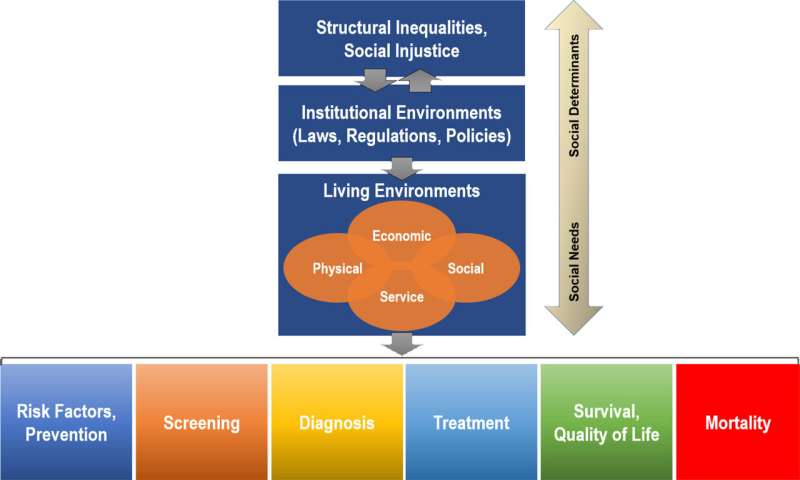
Social determinants of health and cancer disparities. Credit:CA: A Cancer Journal for Clinicians(2025). DOI: 10.3322/caac.70045
In new research on the status of cancer disparities in the United States, American Cancer Society (ACS) scientists report higher cancer mortality rates among adults living in rural areas, certain congressional districts, and among those with lower socioeconomic status. The study also shows Black and American Indian/Alaska Native (AIAN) people continue to bear a substantially higher burden of cancer deaths, overall and from major cancers.
The findings arepublishedinCA: A Cancer Journal for Clinicians.
"Under-resourced and minoritized groups continue to disproportionally experience barriers to cancer prevention, screening, diagnosis, quality treatment, and survivorship, largely reflecting disparities in social determinants of health," said Dr. Farhad Islami, senior scientific director, cancer disparity research at the American Cancer Society and lead author of the study.
"Broad implementation of existing evidence‐based interventions can reduce cancer disparities. We also need more research to identify factors that contribute to cancer disparities and other effective and tailored interventions, especially in populations that have been underrepresented in research studies."
In 2021, ACS published its first biennial report on the status of cancer disparities in the U.S. In this third report, the authors have analyzed several national datasets to provide up-to-date information on disparities in cancer occurrence and outcomes (incidence, stage at diagnosis, survival, and mortality) by sex, race, ethnicity, and socioeconomic status (educational attainment as a proxy). They have also used geographic location (including urbanicity of county of residence and congressional district), along with contributors to these disparities, including major cancer risk factors, screening, and select social determinants of health and health-related social needs.
Research highlights from the report include:
"Mitigating cancer disparities in the U.S. requires intersectoral stakeholder engagement, targeted funding, and effective policies at the federal, state, and local levels," said Dr. Ahmedin Jemal, senior vice president, surveillance, prevention, and health services research at the American Cancer Society and senior author of the report. "For example,expanding health insurance coveragethrough strengthening Marketplaces and protecting and expanding access to Medicaid could help improve outcomes and save lives."
"This report is further proof that access to timely, high-quality, affordable health care is critical to better health outcomes and reducing cancer disparities," said Lisa A. Lacasse, president of the American Cancer Society Cancer Action Network, ACS's advocacy affiliate. "We urge lawmakers at all levels of government to prioritize policies that ensure that everyone has access to comprehensive, affordable health care so serious diseases like cancer can be detected and treated earlier, which can often result in better outcomes and lower costs for patients and the health care system."
More information Farhad Islami et al, American Cancer Society's Report on the Status of Cancer Disparities in the United States, 2025, CA: A Cancer Journal for Clinicians (2025). DOI: 10.3322/caac.70045
Provided by American Cancer Society











Post comments