




































by Gaute Bugge Drangsholt,University of Agder
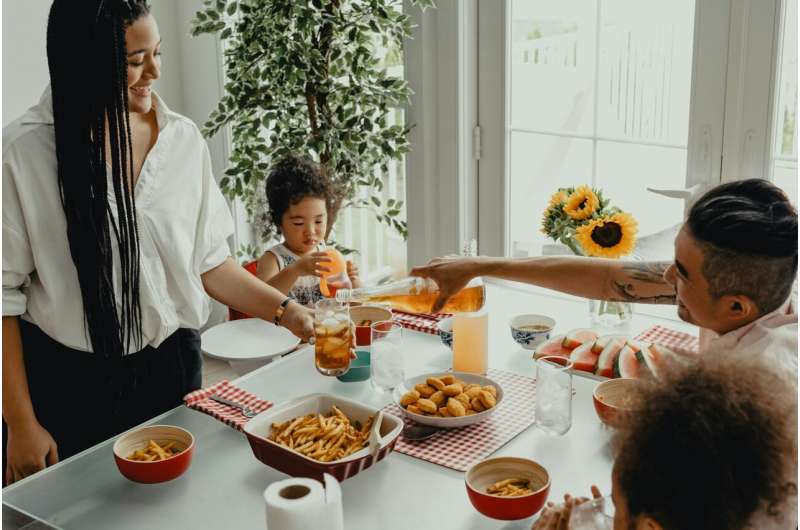
Credit: Unsplash/CC0 Public Domain
"Every time you drink heavily, even if you do so infrequently, it can affect your role as a parent," says doctoral research fellow Barbara Carvalho. She led a comprehensive systematic review conducted by researchers at the University of Agder, in collaboration with Oxford Brookes University.
The need for more research intonondependent alcohol useand parenting practices is among the study's conclusions. Parental behavior is likely to change under the influence of alcohol, yet little is known about how children perceive these changes. When a child is exposed to these behaviors, even moderate drinking may pose a significant public health risk.
"The reality is that parents with alcohol use disorders (AUDs) do not cause the most overall damage to society. Most children who are negatively affected by their parents' alcohol use have parents without an alcohol-related diagnosis," Carvalho says.
First of its kind
The researchers examined 68 studies published between 1991 and 2026. The review differs from most other studies on parenting and alcohol use, which often focus on how this relationship affects children. The paper ispublishedin the journalBehavioral Sciences.
This time, the aim was to look more closely at how drinking alcohol around children may influence parenting practices and change how someone behaves as a parent. This includes everyday parenting interactions and responsibilities, such as communication, warmth and setting boundaries, as well as parents' attitudes toward their children's own alcohol use.
No safe limit
The study reveals a clear association between alcohol use and what the researchers term "impaired parenting practices." Higher alcohol intake leads—perhaps unsurprisingly—to an increased risk of stricter discipline, conflict, reduced attentiveness and lower quality in the relationship between parent and child.
"One of the key takeaways of this study is not that every single glass of wine or beer is dangerous, but rather that there isno safe limit. Alcohol use affects parents, parenting practices, and children in different ways. We need to rethink what is safe," Carvalho says.
Researching the effects of nondependent drinking can be quite challenging.
"These cases are usually far more difficult to identify because, as a society, we are not equally aware of them. This is a problem because a range of behavioral patterns may exist that we are unaware of. Furthermore, this is complicated to study directly, as it would be unethical to make parents intoxicated and observe how they interact with their children," Carvalho says.
She also underlines that her intention is not to play the role of "moral police" or recommend abstinence. Rather, it is to create awareness of possible consequences.
Drinking less often, but more
The findings draw largely on results from Western countries. As many as 53 of the 68 studies included in the review originated in the United States. The transferability of findings across different cultures with regard to alcohol use and parenting practices is therefore limited. Nevertheless, Carvalho believes the findings relating to nondependent consumption are particularly relevant in Norway.
"Norwegians drink less frequently compared with most other European countries, but they consume more when they do drink. There are still strong norms associated with drinking on weekends or during some kind of celebration."
Although younger generations of Norwegians are drinking less, the cultural pattern of consuming larger amounts on drinking occasions still makes this topic particularly relevant, Carvalho argues. The researcher hopes the study can contribute to greater awareness among parents of how their drinking habits can influence family life.
"In the Norwegian public health service, there is a strong emphasis on prevention and early intervention. Therefore, there is already a system in place for preventive communication and other measures that draw our attention to how Norwegian drinking culture can affect the way we carry out our role as parents."
More information Barbara Oliveira Carvalho et al, Associations Between Parental Alcohol Use and Parenting Practices: A Systematic Review, Behavioral Sciences (2026). DOI: 10.3390/bs16020236








Post comments