




































bySWPS University
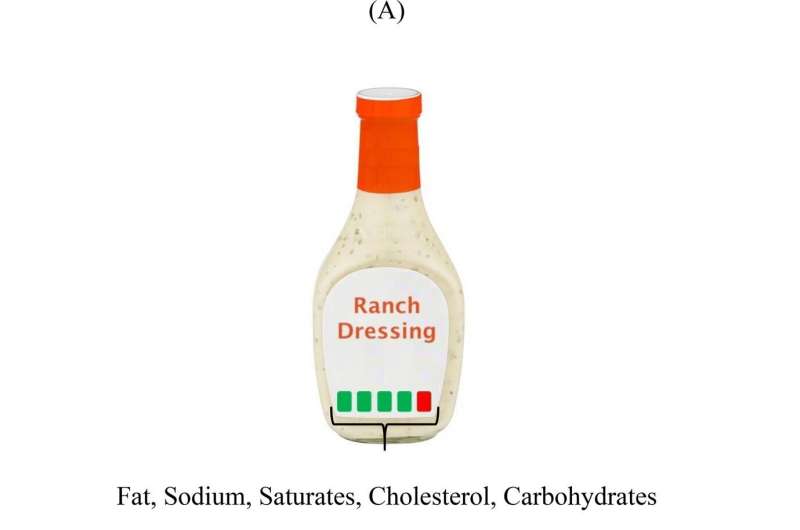
An example of (A) ranch dressing with a color-coded label where four green boxes depict healthy amount of nutrients, and one red label depicts unhealthy amount of nutrients and (B) ranch dressing with traditional labeling where four nutrients are within healthy limits, and one exceeds healthy limits. Credit:Current Psychology(2026). DOI: 10.1007/s12144-025-08847-z
Color coding on food product labels is becoming more common. How does it influence consumers and their dietary choices? Recent research by scientists from SWPS University, the University of Wisconsin, and the University of Massachusetts indicates that color coding is much more effective than simple nutritional tables, and it is all due to the way the brain responds to benefit and risk signals. A paper on this topic ispublishedinCurrent Psychology.
According to the World Health Organization (WHO), overweight and obesity substantially increase the risk of chronic diseases. Over the past 30 years, the percentage of children and adolescents in the United States who are overweight or at risk of becoming overweight has more than tripled, reaching 37% and 34%, respectively. The obesity crisis is primarily driven by reductions in physical activity and overconsumption of foods high in fat and sugar.
To encourage consumers to make healthier choices, color-coded labels are increasingly being used in the European market. Colors are used to indicate nutrient levels relative to percentage reference intakes (RIs) for calories, fat, saturates, sugar, and salt. One such solution, the "traffic light labeling" (TLL) system developed in the UK, illustrates how much intake of a given nutrient a product provides. Products that contain less than 15% of the reference intake are marked green, while those that exceed 25% of the reference intake are marked red.
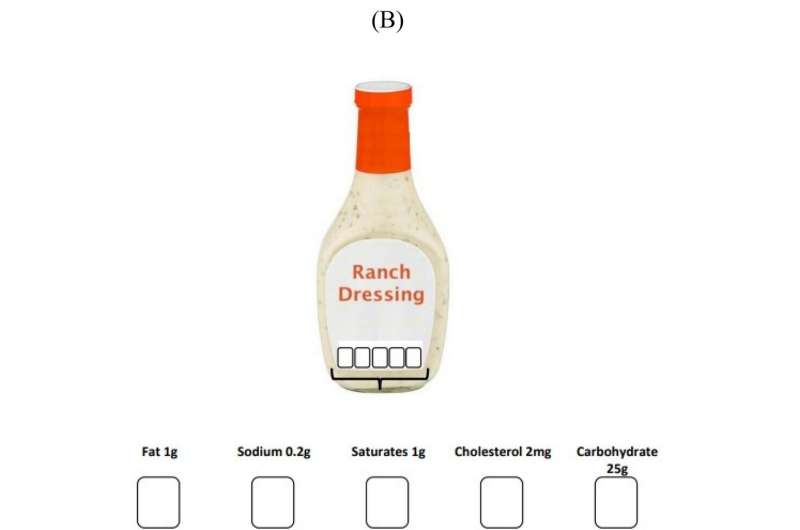
An example of (B) ranch dressing with traditional labeling where four nutrients are within healthy limits, and one exceeds healthy limits. Credit:Current Psychology(2026). DOI: 10.1007/s12144-025-08847-z
A picture is worth a thousand words
"We decided to investigate the psychological mechanisms behind the reading of color-coded product labels. We drew on theories about verbal and visual information processing, as well as the perception of information in positive and negative contexts. We wanted to bridge a gap. Previous studies focused exclusively on consumer purchasing behavior and analyzed the extent to which color-coded labels influenced the choice of healthy food products," says Professor Andrzej Falkowski, a business psychologist from the Institute of Psychology at SWPS University and the author of the study.
Seventy-nine study participants, recruited in the United States from Amazon's Mechanical Turk platform, evaluated food products: chicken noodle soup, ranch dressing, and peanut butter. The products had color-coded ingredient quantities (for clarity, only red and green were used) or traditional text on the front of the packaging. Participants were tasked with rating them using the provided adjectives on a scale from 0 to 10, where 0 meant harmful and 10 meant healthy.
Previous research has shown that images are easier to process for consumers than text. This was also the conclusion in this study. The researchers have shown that colors are processed instantly by the brain, requiring little effort, and decisions are made instinctively. This allows consumers to more easily assess whether a given product will be beneficial to them, even in a hurry.
The power of red
One of the most important findings from the study is that the color red, which indicates a high fat or sugar content, has a much stronger impact on consumers than green, which highlights the positive attributes of a product. The positive-negative asymmetry was not evident in the case of traditional nutritional labeling, where consumers had difficulty distinguishing benefits from threats.
"This result also aligns with existing theories suggesting that negative events exert a stronger influence on behavior than positive ones. It is this "negative bias" that makes color systems so effective. Red causes us to pause and reconsider a purchase," Professor Falkowski emphasizes.
Furthermore, when consumers encounter color codes, they evaluate products more consistently compared to traditional labeling, because they can more clearly distinguish between benefits and risks. Traditional information, even messages like "low fat," is often unclear, while color coding—based on the familiar traffic lights—is clear to everyone, regardless of their level of dietary knowledge.
Colors as a way to combat obesity
The study could have enormous implications for public health policy. "Given the ongoing global challenges of obesity and poor dietary habits, color-coded labeling represents a simple yet impactful strategy for guiding healthier consumer choices," Falkowski says.
By increasing the salience of nutritional information and harnessing visual attention mechanisms, consumers can be encouraged to choose healthier products, and the health of entire populations can be improved, the study authors emphasize.
More information Justyna M. Olszewska et al, Exploring the impact of color - coded labeling on consumer perception: the role of positive and negative information in food choice, Current Psychology (2026). DOI: 10.1007/s12144-025-08847-z











Post comments