



































by Andrew Parsons,The Conversation
Credit: Matheus Bertelli from Pexels
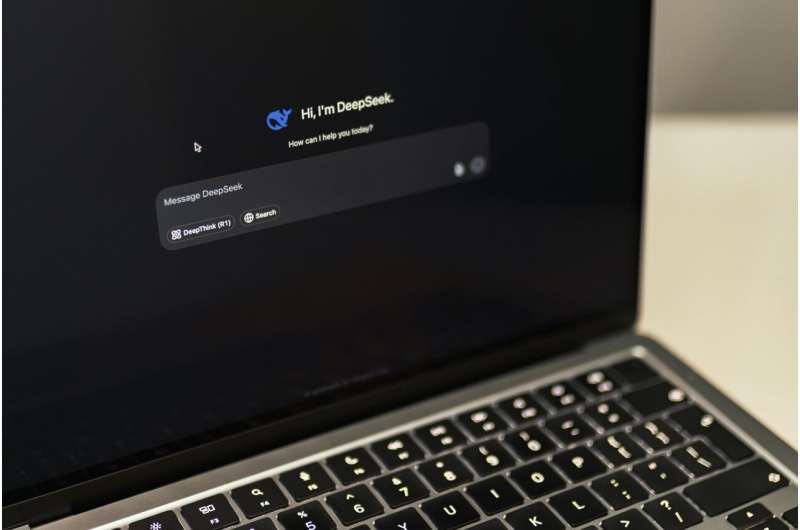
A father is worried about his toddler, who has been running a fever for two days and pulling at one ear. A 65-year-old woman has been getting winded on her morning walks and feeling more fatigued than usual. Both reach for their phones and type their symptoms into an AI chatbot.
"Your child likely has an ear infection," the father learns. "Your symptoms could indicate a cardiac condition," the woman reads.
Those are helpful answers—and there's a good chance they're correct. Artificial intelligence is approaching, and in some cases exceeding, doctors' ability to make accurate diagnoses. An April 2026 study found OpenAI's o1 model had a78% accuracy rateon complex diagnostic cases published in theNew England Journal of Medicineand also outperformed experienced doctors when diagnosing actual emergency room patients. Similarly, ChatGPT, working on its own,outperformed physiciansin diagnosing complex cases, a 2024 study found—even when the physicians were able to use ChatGPT themselves.
Making a correct diagnosis, though, isonly half a doctor's job. The other half is knowing what to do about it—in other words, deciding how to manage a patient's health condition.
I am adoctor and medical educatorstudying how doctors make these decisions, a process known asmanagement reasoning, and how doctors in trainingdevelop this ability. For clear-cut health concerns, an AI diagnosis may be enough for someone to get the care they need—a little numbing cream for a baby's gums, say, or an appointment with a cardiologist.
Butuncertaintyis common in clinical practice. Often, knowing what ails a patient is necessary but not sufficient for determining how to care for them. And how to manage a patient, even after the diagnosis is settled, is acomplex question.
Diagnosis categorizes, but management prioritizes
Experienced doctors do not assess each patient from scratch. Over years of practice, they build mental shortcuts calledillness scripts.
Illness scripts are more than symptom checklists. They capture what a disease typically looks like, who tends to get it and how it most often progresses. When a doctor sees a new patient, they match what they observe against these mental scripts—a process of categorization and pattern recognition.
When a patient appears with afamiliar pattern of signs and symptoms, a doctor calls up the matching mental script almost without thinking. This frees them to notice elements that don't quite align: a symptom that doesn't fit, or a detail in the patient's history—a recent trip abroad, an unusual exposure at work—that points toward a different diagnosis.
It's not surprising that AI is good at this pattern-matching process.Large language modelslike ChatGPTwork in a similar way. They predict what word should come next in a sentence based on patterns learned from enormous amounts of text, including the medical literature. In that literature, the word "pneumonia" reliably follows certain symptom patterns: fever, say, combined with a cloudy patch on a chest X-ray. Pattern matching, at this level, is essentiallythe same thing a doctor doeswhen fitting a patient's symptoms to an illness script.
But decidingwhat to do next—what tests to run, what treatments to try, what to monitor and what to follow up on—works differently. Instead of one right answer, a doctor facesmultiple reasonable options. The art of medical management is prioritizing which among these options is best for the patient in front of you.
The human advantage
So how does a doctor go from diagnosing a patient to figuring out how best to care for them? The answer is almost always, "It depends."
Consider two men, Marcus and Tomás, both 68, both just diagnosed with early-stage prostate cancer. Their biopsies show the same thing: a slow-growing tumor confined to the prostate.
Both are offered thesame two management options. Treat now, with surgery or radiation, accepting the risks of urinary incontinence and changes to sexual function. Or monitor closely with regular tests and biopsies, treating only if it grows. A study that followed more than 82,000 men with early-stage prostate cancer for 15 years found thatfewer than 3 in 100 diedof their prostate cancer regardless of which path they chose, though men who chose monitoring were about twice as likely to see their cancer spread.
AI can present both options alongside those statistics. What a doctor brings is knowledge of the person sitting across from them.
Marcus has no other significant health conditions. His doctor knows this, and knows Marcus well enough to know that uncertainty sits badly with him. For a patient without other pressing health concerns, a slow-growing tumor has time to progress and become something more serious. Both management paths are genuinely reasonable, but Marcus cannot live with waiting. Knowing cancer is in his body, watched but untreated, is not something he can set aside. He chooses treatment.
Tomás has advanced heart failure, something his doctor has been managing alongside him for years. She knows that his heart condition poses a more immediate threat to his health than this slow-growing tumor does. She knows, too, that he watched a friend go through radiation and come out diminished. Treating aggressively would mean bearing real costs for a benefit that may never arrive. She recommends active surveillance. For Tomás, it is the right answer and a relief.
Different management decisionsare the norm in medicine. The right path for any patient depends on who that patient is and what they value, and on a doctor's judgment about where the evidence is reliable andwhere genuine uncertainty remains.
Judging risk and uncertainty
To decide how to manage a patient's condition, a doctor first considers evidence from the medical literature and thenapplies the available management optionsto the patient's particular circumstances. This requireshonest communication,shared decision-making, jointly navigating risk andacknowledging uncertainty.
Some risk can be measured. Forchest pain, doctors usescoring toolsthat estimate a patient's short-term likelihood of a heart attack based on their symptoms and test results. AI can likely work through those numbers faster than most doctors.
But risk and uncertainty at the bedside or in the clinic are difficult to measure. Scoring systems and practice guidelines are designed for the average patient—an idealized person who does not exist. And both doctors' and patients' sense of risk and uncertainty areshaped by their experience. For many patients, this includes along and justified history of mistrustin the health care system.
AI does not know what you have been through or what risk trade-offs you are willing to accept. Itcannot acknowledge uncertaintythe way a good doctor can, returning to it with you as your circumstances change.
This is where diagnosis and management part ways. The father of the feverish toddler probably got a useful answer: AI has seen enough feverish toddlers in the medical literature to make a reasonable call. But knowing what to do next, including when to stop watching and start worrying, is a conversation best had with your doctor.
This article is republished fromThe Conversationunder a Creative Commons license. Read theoriginal article.
Journal information: New England Journal of Medicine







Post comments