




































by Michael E. Newman,Johns Hopkins University School of Medicine
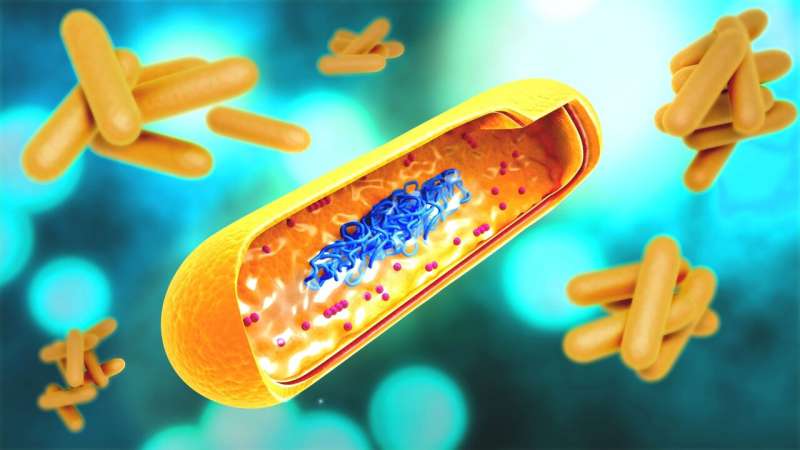
Artist’s illustration of tuberculosis (TB) bacteria. A new intranasal therapeutic vaccine against TB, developed by Johns Hopkins researchers, has been shown in mice to clear the bacteria faster, reduce lung inflammation and prevent disease relapse when combined with first-line TB drug therapy. Credit: U.S. Centers for Disease Control and Prevention
In a paperpublishedin theJournal of Clinical Investigation, a research team at Johns Hopkins Medicine and the Johns Hopkins Bloomberg School of Public Health reports developing a therapeutic intranasal (nose-delivered) DNA vaccine against tuberculosis (TB) that fuses two genes with the goal of directing the immune system to fight drug-tolerant bacterial "persisters" that can survive prolonged antibiotic therapy and contribute to disease relapse.
Global burden and treatment challenges
A scourge for at least the past 6,000 years, TB is estimated by the World Health Organization (WHO) to be a latent, symptom-free infection in about one-quarter of the world's population, approximately 2 billion people. In 2024 alone, WHO reported that more than 10 million people worldwide developed active TB disease, with 1.2 million deaths recorded. This makes TB the leading cause of death from a single infectious disease.
In recent years, WHO has called fortherapeutic vaccinesthat can be used alongside drug therapies to shorten TB treatment regimens and improve outcomes, particularly because long multidrug courses are difficult to complete, and drug-resistant TB strains continue to emerge. The vaccine described in the new Johns Hopkins study shows promise for meeting that need.
Promising results in mouse models
"Administered together with first-line TB drug therapy, our intranasal DNA fusion vaccine helped infected mice clear the disease bacteria faster, reduced lung inflammation and prevented relapse after treatment ended," says study lead author Styliani Karanika, M.D., a faculty member of the Johns Hopkins Center for Tuberculosis Research and assistant professor of medicine at the Johns Hopkins University School of Medicine.
"The vaccine also helped the powerful TB drug combination ofbedaquiline, pretomanid and linezolid work better, suggesting it could be used with treatments against drug-resistant TB to help the body fight the disease, even hard-to-treat cases."
How the fusion DNA vaccine works
The new Johns Hopkins vaccine, says Karanika, fuses two genes, relMtband Mip3α, and is given through the nose to take advantage of three beneficial biological activities.
"First, TB bacteria possess a gene, relMtb, that produces a protein, RelMtb, to help the microbes survive hostile conditions such as antibiotic exposure, low oxygen and nutrient limitation by entering a drug-tolerant persistent state," she says. "Fusing relMtbwith the Mip3α gene produces a signal that attracts immature dendritic cells—key cells that pick up TB proteins and 'present' them to T cells, the immune cells that help coordinate a targeted attack on the TB bacteria."
"Finally, intranasal delivery focuses vaccination on the respiratory mucosa in the lungs where TB infection occurs, helping generate long-lasting localized T-cell immunity in the airways and lungs, along with systemic immune responses," says Karanika.
Immune responses in animal studies
By combining these strategies, the investigators aimed to strengthen immune activity directly in the respiratory tract. In the mouse studies, this approach increased dendritic cell recruitment and activation, improved how closely dendritic cells and T cells were organized in the lungs, and generated durable, antigen‑stimulated T-cell responses—both locally and systemically—from two types of T cells,CD4(also known as helper T cells) and CD8 (also known as killer T‑cells).
In rhesus macaques, the researchers found that their nose-delivered DNA vaccine prompted measurable TB‑focused immune responses in the blood and in the airways similar to what led to lower bacterial counts in the lungs of mice they studied. These responses persisted for at least six months, suggesting the durability of the vaccine's action. However, says Karanika, this primate work only measured immune activation and not response to a TB challenge.
Next steps toward human trials
She says more studies are needed before any human clinical trials can be approved.
"These nonhuman primate data are encouraging because they show that the Mip3α/relMtbvaccine can generate durable, antigen-stimulated immune responses in an animal model whose immune system more closely resembles that of humans," says Karanika. "That gives us an important translational bridge between the mouse efficacy studies and the additional preclinical work needed before human trials."
The authors say their findings support a broader strategy of targetingTB persisterswith immunotherapy, rather than relying solely on antibiotics to eliminate actively replicating bacteria. Because DNA vaccines are relatively stable and can be manufactured efficiently, they may offer practical advantages if this approach ultimately proves effective in humans.
Publication details Styliani Karanika et al, Immunotherapy targeting drug-tolerant Mycobacterium tuberculosis persisters accelerates tuberculosis cure in preclinical models, Journal of Clinical Investigation (2026). DOI: 10.1172/jci196648 Journal information: Journal of Clinical Investigation









Post comments