




































by Carrie McDonough,The Conversation
Credit: CC0 Public Domain
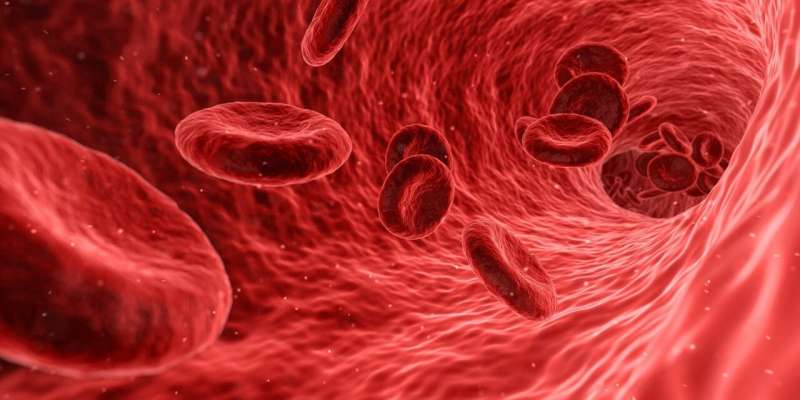
Virtually every living thing on Earth, fromPatagonian penguinstonewborn human babies, has been touched by the synthetic chemicals known asper- and polyfluoroalkyl substances, or PFAS. In fact, you would be hard pressed to find a sample ofhuman blood,tissue, orbreast milkwithout detectable levels of at least one type of PFAS.
Making matters worse, researchers are continually uncovering links between human exposure to PFAS andpoor health outcomes, including aweakened immune system, a heightenedrisk of kidney and testicular cancer, andpregnancy complications, including preeclampsia and reduced birth weight. Thelevels of some PFAS considered safein U.S. drinking water are decreasing. Despite this, the Trump administration is in the process ofrevoking and possibly rewriting proposed regulationsfor all but PFOA and PFOS, two of the most commonly used PFAS until the early 2000s. U.S. maximum contaminant level goals for PFOA and PFOS are 0 parts per trillion—meaning there areno levels that the U.S. Environmental Protection Agency consider safe.
Meanwhile,thousands of PFAS have not been studiedand haveno regulationor oversight. In many cases, there is no monitoring data on their presence in consumer products, water, and food.
As anexpert in chemical pollution, I have studied a wide range of synthetic and natural chemicals that can have harmful health effects for humans and wildlife. A major focus of my current research is tracing PFAS from their initial source—including consumer products, contaminated food and water, and the air—to their resultingfingerprint in an organism's blood and tissues.
By following the journey of how PFAS move into the bodies of living things—including people—scientists like me are working to improve safety recommendations and usage guidelines for these chemicals. First, though, we need to understand how these complex chemical mixtures are transformed as they accumulate in the body.
What are PFAS?
PFAS are a large classof organic chemicals—meaning molecules that contain carbon atoms—that have fluorine atoms added to them. This fluorination allows PFAS to aggregate on surfaces in ways that are desirable for many applications.
For example, PFAS are used innonstick cookware,food packaging,cosmetics,textiles, and eventoilet paper, among many other commercial and industrial products. They're also heavily used insemiconductor manufacturingandlithium-ion batteries.
PFAS are commonly calledforever chemicalsbecause of their astonishing persistence—due to the strong chemical bonds between carbon and fluorine, they don't break down easily. This durability is desirable for manufacturers, as materials made with PFAS can function for a long time without degrading.
However, persistence becomes problematic when PFAS leach or evaporate out of products and into the surrounding environment. PFAS canremain in drinkingwater sourcesand in sedimentfor decades to centuries.
If dissolved in water or released into the air, PFAS can alsotravel long distancesfrom their point of origin, ending up in remote locations. For example, PFAS initially released from industrial regions can end up in theblood of white sharks in the Atlantic Oceanor inArctic environments.
PFAS fingerprints
What happens when PFAS are absorbed and accumulate in the body?
When someone is exposed to PFAS, it leaves a unique pattern of chemical contamination—what researchers call aPFAS fingerprint—in their blood. Studying these PFAS fingerprints enables scientists to learn about sources of PFAS exposure and how they differ among people who live in different places, have different jobs, and use different products, among other factors.
But to be able to use these PFAS fingerprints, researchers first need to understand how specific exposurescontribute to someone's PFAS fingerprintover time. The composition of this fingerprint is different from the mixture of chemicals someone was initially exposed to, as some PFAS accumulate in blood to a greater extent than others. Without understanding how a PFAS mixture is distorted and changed in the body, it's very difficult to know what sources were major contributors to a person's lifelong PFAS exposure.
For example,firefightersand military service members useaqueous film-forming foamsthat contain hundreds of poorly studied PFAS. These are soapy, sudsy materials that form a film over fire andstarve it of oxygen. They're commonly used in emergencies, such as airplane crashes, train wrecks, vehicle fires, or any other fire involving fuels.
Many firefighters and first responders who have used these foams are now grappling with serious health problems,including cancer, and many have wondered whether PFAS contributed to their illness.
A clearer understanding of the PFAS fingerprint that would be expected in someone's blood after years of using these foams could help determine whether they are a unique source of the PFAS accumulating in their blood.
PFAS in the body
Fingerprints at the scene of a crime are often a major clue leading detectives to the perpetrator. When it comes to identifying sources of PFAS contaminating human bodies, however, researchers like me aren't always so lucky.
For one, PFAS are typically present at low concentrations in the environment but can build up to higher levels in the body. For example, people drinking water containing PFOS will typically have levels50 to 100 times higher in their bloodthan were measured in the water. This is because the body's rate of PFOS uptake exceeds its rate of excretion.
But not all PFAS will increase in blood to the same degree. PFAS that are more likely tobind to biological components, such asproteins and fats, will more readily accumulate in the body. As the mixture of chemicals in drinking water, for example, continues to accumulate in the body, these types ofmore bioaccumulative PFAS, such as PFOS, will make up a higher proportion of the fingerprint than other types. This distortion complicates my and other scientists' job, since we need to be able to predict how much each PFAS accumulates in the body to estimate how these chemicals will change in the body.
On top of predicting which PFAS will accumulate in the body and which will be excreted, researchers also have to contend with a person'smetabolism, the processby which chemicals—including some PFAS—are biologically transformed by the body.
Although the chemical structure of PFAS may change in the body, the resulting chemical is usually still a PFAS: a highly fluorinated molecule. After entering the body, many types of PFAS used in different products can be transformed over days to years, while the highly fluorinated backbone of the molecule remains intact. By these processes, many different PFAS eventually transform intojust a few highly persistent PFAS. For example, many distinct PFAS containing a PFOS backbone canultimately change to PFOS in the body.
Once these distinct PFAS have all become the same common chemical, it may be impossible to identify how a person was initially exposed.
Protecting yourself from PFAS
Despite all the complexities of PFAS research, researchers are making progress toward better understanding how these thousands of chemicals accumulate and transform in the body. Studying real products that contain complex PFAS mixtures can help researchers get closer to finding biomarkers that can pinpoint a PFAS source in a person's blood.
The most effective way to protect human health would be tocease the use of PFAS entirelyin all but the most essential of products. Until then, consumers can look to resources such as those from theGreen Science Policy InstituteandEnvironmental Working Groupto help them avoid PFAS in products they use.
There are also a number of commercial laboratories that offer drinking water and blood testing for some common PFAS. But it's important to remember that these testsdon't capture the whole pictureof your PFAS fingerprint. Scientists like me are still hard at work capturing many more PFAS that have been overlooked.
This article is republished fromThe Conversationunder a Creative Commons license. Read theoriginal article.
Key medical concepts Preeclampsia perfluorooctane sulfonic acid Biomarkers









Post comments