


































by Catherine Manning, Arnold J Wilkins,The Conversation
Credit: Unsplash/CC0 Public Domain
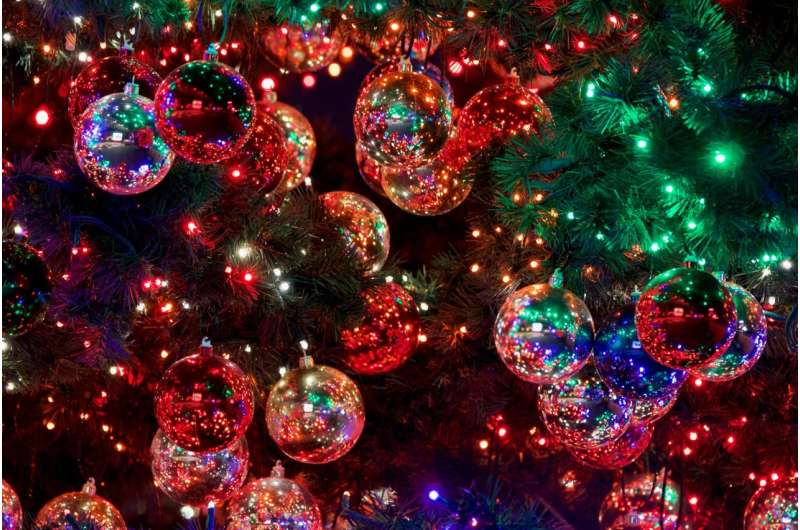
It is the time of year when decorations appear everywhere and everyone has a preferred style, from bright flashing lights to something more understated. Christmas decorations are meant to be cheerful, yet for some people, certain types of visual input can be surprisingly difficult to tolerate.
No one wants to dampen thefestivemood, but it is worth knowing that decorations can cause discomfort in ways that are easy to overlook.
Flashing lights are a familiar Christmas choice, probably because they grab attention. We have known for a long time that flashing lights cantrigger seizures in people with epilepsybecause rapid flashes can synchronize activity in parts of the brain that are already more susceptible to overstimulation.
Autistic people can also be sensitive to flashing lights because manyautistic people have heightened sensory responsiveness. People with migraines may be affected because bright, flickering contrast can stimulate the visual cortex andlead to headaches.
Even without these conditions,flashing lights can feel unpleasant. Faster flashes are usually worse. Anything above three flashes per second tends to more easily overload the visual cortex.
Since many modern lights have adjustable settings, slowing the flash rate or turning the flash off entirely can make the display more comfortable for people who are sensitive to this type of stimulation.
Lights can also be uncomfortable even when they appear steady. Some produce a rapid flicker that is too fast for you to see. A quick way to check is to record the lights on your phone using the video "slo mo" setting. Invisible flicker canaffect reading ability,cause headachesand increase visual fatigue.
People with sensory sensitivities, which can include heightened sensitivity to noise, touch, light, color contrast or movement, are especially likely to beaffected by flicker. Researchers are still exploring how flicker affects different groups, and the precise mechanism is not fully understood. But we know that certain lights bother some people far more than others.
When buying white Christmas lights, you will usually see two options. Cool white resembles bright daylight and warm white looks more like sunrise or sunset.
In general, cooler light can help with concentration because it mimics the color temperature of daylight, which signals alertness to the brain.Warmer light tends to feel more relaxingas it resembles evening light when you are winding down. The choice depends on the atmosphere you want to create.
Warmer light can be particularly welcome when it is cold outside because it canmake people feel physically warmer. People with sensory sensitivities, includingmany autistic people, may prefer warm whitebecause cool white can feel harsher on the eyes, which makes it more uncomfortable to look at for long periods.
Festive color schemes often rely on red and green. Red, however, is widely reported to be the most uncomfortable color. One reason is because the photoreceptors responding to red light lead tomore brain activity in the gamma range, which is a fast brain rhythm.
Discomfort is greater when red is adeep red or when it flickers. It can also feel more intrusive when displayednext to strong contrasting colors such as green or blue. Choosing reds and greens that are closer in tone to each other and avoiding alternating red and green lights can help reduce the strain.
Brightness also matters. Brighter lights are generally more uncomfortable for most people, and this isparticularly true for people with sensory processing differences. Strong light feels more intense and can trigger quicker fatigue or discomfort.
For many people, visual discomfort caused by lights is mild and passes quickly. For others, it can lead totiredness, nausea, headaches and feeling overwhelmed. People vary widely in how sensitive they are. Knowing that not everyone experiences decorations in the same way is a simple step to support friends and family. Something as small as changing a light setting or switching off certain decorations when someone visits can genuinely help.
Christmas decorations bring joy and brighten the darkest months of the year. With a little thought about how different lights and colors affect people, we can keep the festive sparkle while making the season more comfortable for everyone.
This article is republished fromThe Conversationunder a Creative Commons license. Read theoriginal article.
Key medical concepts Epilepsy Migraine Autism Spectrum Disorder







Post comments