




































By Walter and Eliza Hall Institute of Medical Research
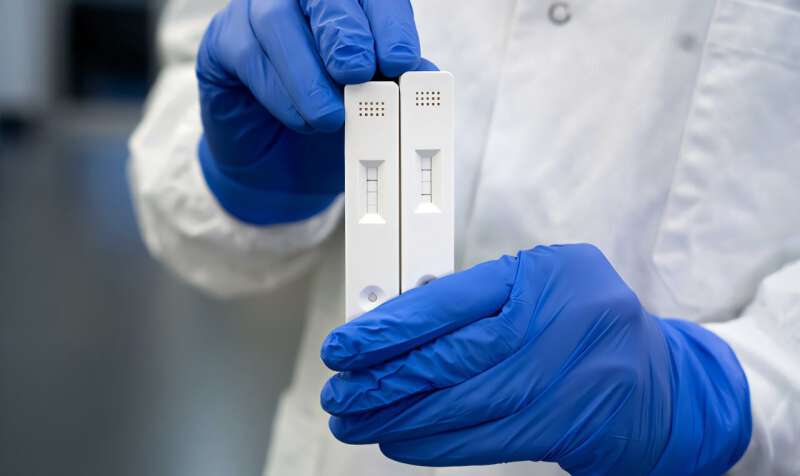
Using a finger-prick blood sample, the new test can deliver accurate results at the point of care in 15 minutes. Credit: Walter and Eliza Hall Institute of Medical Research
Iron deficiency is one of the world's most common nutritional disorders, affecting millions of women and children globally. Yet diagnosing it remains difficult in many low-resource settings, where access to laboratories and trained health care workers is limited.
The new WEHI diagnostic test could help overcome these critical barriers.
Using a finger-prick blood sample, the test delivers accurate results at the point of care in a single visit—eliminating the need for specialized laboratory equipment while enabling rapid, convenient diagnosis.
It can also be administered by a broad range of health care professionals—removing the need for dedicated training that can be hard to deliver in remote or under-resourced communities.
Dr. Emily Eriksson, who co-led the research team that developed the test, says the diagnostic could become a scalable solution for countries where access to laboratory testing and iron infusions is limited.
"Iron infusions are among the most prescribed medicines in Australia—reflecting the prevalence of iron deficiency and availability of effective treatment options," she said.
"But simple methods to diagnose the condition remain largely out of reach for those living outside of high-income countries.
"Our test could close this health inequity gap and transform the lives of millions of women and babies around the world."
While other rapid ferritin tests are available, WEHI's test has been specifically designed to provide a clear visual reference at theclinically important ferritin threshold of 30 ng/mL, helping health care workers confidently identify iron deficiency at the point of care.
Because the test closely matches the accuracy of standard laboratory ferritin measurements, it can provide a reliable diagnosis without the need for a follow-up venous blood test—potentially improving access to timely diagnosis and treatment in remote and low-resource settings where laboratory services may be limited.
The test is co-developed by Professor David Anderson and Huy Van.
Low iron occurs when the body's iron stores become depleted, while anemia develops later when there is insufficient hemoglobin in the blood to carry oxygen effectively.
In many low-resource settings, health care workers only have resources to screen for hemoglobin, which can identify anemia but cannot confirm iron deficiency.
Dr. Ricardo Ataide, who will lead the field validation and implementation of the diagnostic, said the real breakthrough of the test is its ability to instantly measure ferritin—the gold-standard biomarker for iron deficiency.
"Identifying iron deficiency in the context of, or even before it progresses to anemia, is the critical gap this test is addressing," he said.
"Too often, women with low iron stores are missed because their hemoglobin levels appear normal.
By directly identifying low ferritin levels, our test enables clinicians to clearly identify those women who are truly iron deficient and would benefit from timely treatment."
The point-of-care ferritin testing would support both accurate diagnosis and ongoing monitoring.
Ataide said, "Our test could empower health care professionals to make evidence-based, informed treatment decisions, with the potential to improve outcomes for women globally."
It's hoped the new point-of-care test could form a cornerstone of future maternal health programs in resource-limited settings.
Iron deficiency is the most common cause of maternal anemia and affects millions of pregnant women worldwide, particularly in low- and middle-income countries.
Anemia during pregnancyis linked to serious complications for both mother and baby, including preterm birth, restricted fetal growth and low birth weight.
In 2025, a landmark trial led by WEHI and the Training Research Unit of Excellence (Malawi) found asingle iron infusion in the third trimestercansignificantly reduceiron-deficient anemia in pregnant women.
Researchers say the new test could, for the first time, identify who would most benefit from this treatment—moving away from a blanket approach and ensuring limited resources like iron infusions are used where they will have the greatest impact.
The test is being contract-manufactured under relevant international industry standards before deployment in Malawi and Kenya to demonstrate real-world performance, generate critical evidence and establish a pathway for rapid implementation in low-resource settings. Completion of the project is expected to significantly advance the test toward regulatory approval and global distribution.








Post comments