




































byCanadian Medical Association Journal
Credit: Pixabay/CC0 Public Domain
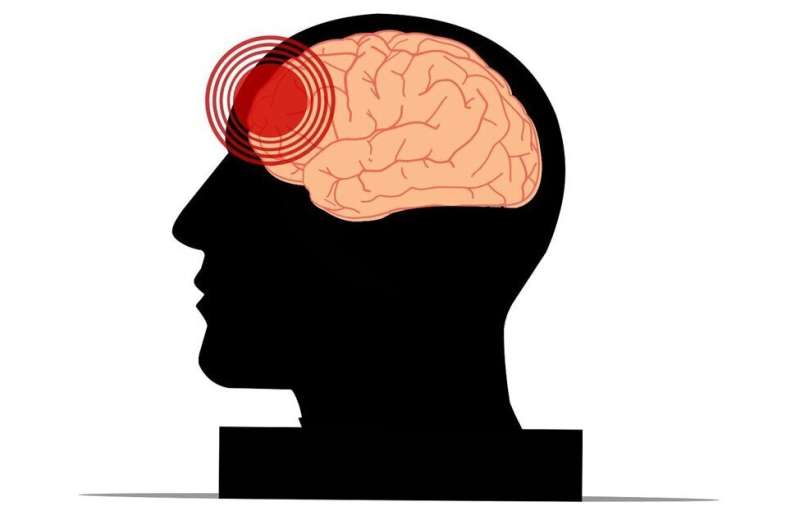
Traumatic brain injuries (TBI) in older adults are associated with new cases of dementia, use of home care services, and admission to long-term care, according to new researchpublishedin theCanadian Medical Association Journal.
"One of the most common reasons for TBI in older adulthood is sustaining a fall, which is often preventable," write Dr. Yu Qing Huang, ICES Ph.D. student, and Dr. Jennifer Watt, associate professor and ICES scientist, both geriatricians at St. Michael's Hospital, Unity Health, and affiliated with the University of Toronto, along with their co-authors. "By targeting fall-related TBIs, we can potentially reduce TBI-associateddementiain this population."
Traumatic brain injuries are caused by a direct impact to the head or indirect force (e.g., whiplash) with one of the following: loss of consciousness, posttraumatic amnesia, disorientation, or neurological signs like slurred speech, muscle weakness, or vision changes. More than 50% of TBIs inolder adultsresult from falls, and one million people in Canada over age 65 will experience a TBI in their lifetime.
To understand the impact of late-life TBI and the association with new cases of dementia and related care needs, researchers analyzed data on more than 260,000 adults aged 65 years or older with and without TBI between April 2004 and March 2020. The study followed participants until a diagnosis of dementia, to March 2021, or death.
New TBI was associated with a 69% increased risk of subsequent dementia in the first five years, a 56% increased risk beyond five years, and more days of publicly funded home care (87 days compared with 84 days in people without TBI).
Age and female sex were associated with a higher risk of dementia, with about 1 in 3 people aged 85 years and older predicted to develop dementia after TBI. Income was also linked to dementia risk, with people fromlow-income neighborhoodsat higher risk of dementia than those in high-income neighborhoods. People living in smaller communities, low-income regions, and areas with less ethnic diversity were more likely to be admitted to along-term carefacility.
"Our findings suggest that to better align limited health resources with population needs, specialized programs such as community-based dementia prevention programs, andsupport servicesshould be prioritized for female older adults (≥ 75) living in smaller communities and low-income and low-diversity areas."
The authors intend these results to help clinicians and families navigate the effects of a TBI.
"Although TBI has been studied as a risk factor for dementia in adulthood, our findings emphasize its significant association with an increased rate of incident dementia, even when it is sustained in late life, and how this risk changes over time," write the authors. "This critical information can assist clinicians in guidingolder patientsand their families to better understand long-term risks."
More information: Rate of incident dementia and care needs among older adults with new traumatic brain injury: a population-based cohort study, Canadian Medical Association Journal (2025). DOI: 10.1503/cmaj.250361 Journal information: Canadian Medical Association Journal
Provided by Canadian Medical Association Journal










Post comments