




































byHouston Methodist
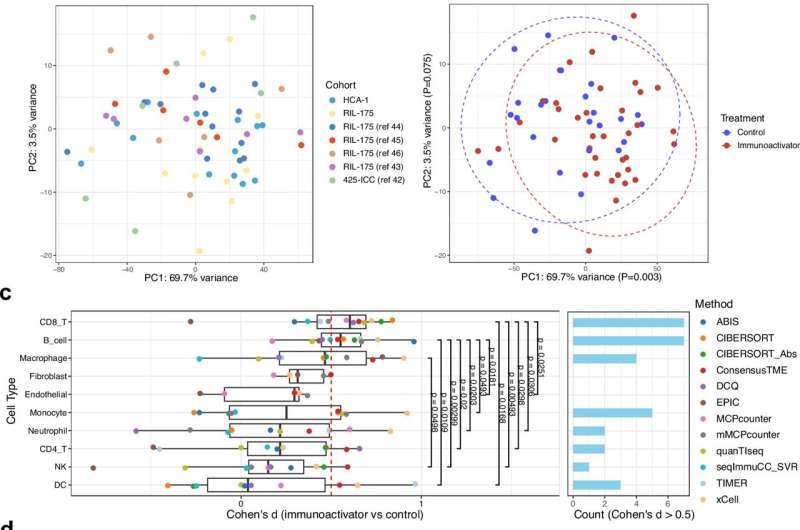
ICB immunotherapy increased B-cell infiltration. Credit:Nature Communications(2025). DOI: 10.1038/s41467-025-66581-3
Scientists have identified a promising strategy to improve liver cancer immunotherapy: targeting B-cells. While immunotherapy has transformed cancer treatment by activating T-cells—a type of immune cell that fights cancerous cells—many patients still fail to respond. New research shows that B-cells—another type of immune cell that fights infections—may play a surprising role in limiting immunotherapy's effectiveness.
"Inhibiting B-cell-mediated Immunosuppression to Enhance the Immunotherapy Efficacy in Hepatocellular Carcinoma," was recentlypublishedinNature Communications. The study's principal investigator, Dan G. Duda, Ph.D., scientific director of Transplant Oncology and Therapeutics in Houston Methodist Research Institute, said that most current research efforts are focusing on activating T-cells against cancers. This study showedtumor-associated B-cellscan create an environment that suppresses T-cell activity, allowing cancer cells to escape immune attacks.
"We observed a significant rise in B-cell activity in the tumor, suggesting they may play an important role in how cancer escapes treatment," said Duda. "By blocking these immunosuppressive B-cells, we may be able to remove this barrier and enhance the power of immunotherapy."
The researchers used advanced laboratory and experimental models to uncover how B-cells contribute to immunotherapy resistance in liver cancer. Usingliver cancer mouse models, they tested treatments that either blocked B-cells or targeted immune pathways.
They found that when tumors stopped responding to immunotherapy, B-cells moved into the tumor and formed clusters that looked like special immune structures calledtertiary lymphoid tissues.
"Combining B-cell depletion with immunotherapy significantly improved survival and reduced metastasis," said Duda, who conducted the work when he was at Massachusetts General Hospital. "These exciting findings suggest that targeting B-cells or their signaling pathways could overcome acquired resistance and enhance the effectiveness of cancer immunotherapy, including in cases where the disease has spread."
The research also pinpoints the need for precision approaches—selectively targeting the B-cell subsets that drive resistance while preserving their beneficial roles in producing antibodies that fight diseases.
More information Xin Liu et al, Inhibiting B cells enhances the efficacy of STING agonism or immune checkpoint blockade in hepatocellular carcinoma, Nature Communications (2025). DOI: 10.1038/s41467-025-66581-3 Journal information: Nature Communications









Post comments