




































by Leslie Orr,University of Rochester Medical Center
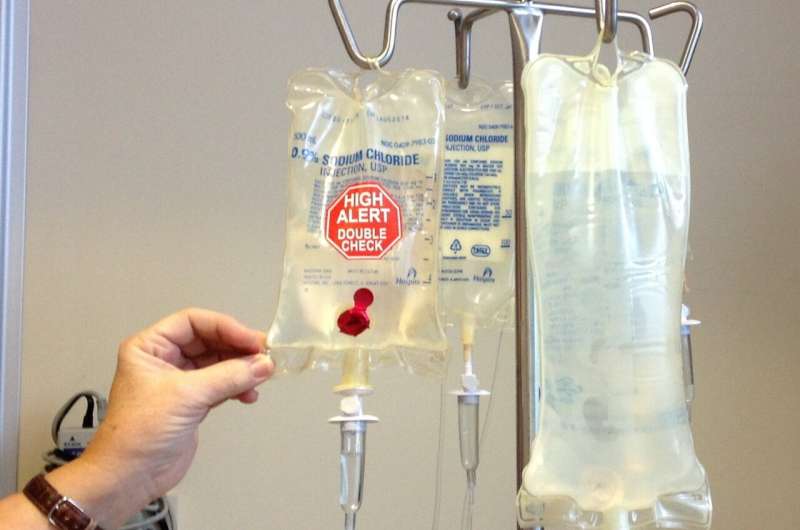
Credit: Pixabay/CC0 Public Domain
People aged 80 and older with a common type of lymphoma can take a half-dose of chemotherapy and be cured or significantly extend their survivorship with fewer toxic side effects, a new study shows.
The work supports one of Wilmot Cancer Institute's primary goals: To address all aspects of aging and cancer, and improve treatments for the region's large and growing population of people ages 65 and older.
Senior investigator Paul Barr, MD, a professor of Medicine at the University of Rochester, presented thestudyat the American Society of Hematology (ASH 2025) annual meeting. They were among eight separate Wilmot laboratories that also presented research at ASH. First author is Danielle Wallace, MD, assistant professor of Medicine, who led the trial. (Barr is also assistant director of Clinical Research at Wilmot.)
It doesn't make sense to give an 80-year-old cancer patient the same dose of chemotherapy as a younger person, they said—and research has already proven this general approach is effective.
But their study evaluated whether the lower dose was valid in a "real world" group of patients treated at clinics across the U.S. The study did confirm the safety and effectiveness for millions of people seeking care in non-academic, community cancer clinics outside of National Cancer Institute-designated centers such as Wilmot.
Wallace and Barr partnered with COTA Healthcare, a company that collects data for cancer research, to analyze one of the largest datasets available and chart the outcomes for nearly 1,400 older people with diffuse large B-cell lymphoma (DLBCL).
The standard treatment for DLBCL is a chemotherapy cocktail known as R-CHOP, and in this case the older patients received "mini-R-CHOP." The mini-dose cured the same number of individuals.
"It also seemed like people who got mini-R-CHOP had a lower rate of stopping treatment because of side effects compared to full-dose R-CHOP," Wallace said. "We want people to get all their planned chemotherapy. In this study, it looks like a Goldilocks regimen—where it's preserving effectiveness but limiting toxicity."
Currently at Wilmot, Wallace is enrolling older patients with DLBCL into a new trial evaluating mini-R-CHOP plus an immunotherapy drug, mosunetzumab. The study is the third in a series of similar trials focused on refining treatments for the oldest patients and is supported by the Lymphoma Scientific Research Mentoring Program. Previous studies testing mosunetzumab in people with lymphoma, by Patrick Reagan, MD, associate professor of Medicine, served as the foundation for Wallace's current trial.
"It's important to emphasize that our investigators are not only working hard to eliminate or reduce side effects of cancer treatment, particularly for our older patients—but they are also leading and initiating clinical trials," said Wilmot Director Jonathan Friedberg, MD, MMSc. "Providing access to cutting-edge studies and offering treatments that are not yet widely available is a primary benefit of being an NCI-designated cancer center."
Wilmot has long been considered a powerhouse in lymphoma research and clinical care. It received the special designation from the National Cancer Institute in March, placing it in the top 4% of all cancer centers nationally. Wilmot draws patients primarily from a 27-county area across western and central New York with a high cancer incidence rate.
More information Abstract: meetings-api.hematology.org/ap … act/vmpreview/295933
Provided by University of Rochester Medical Center









Post comments