




































byKumamoto University
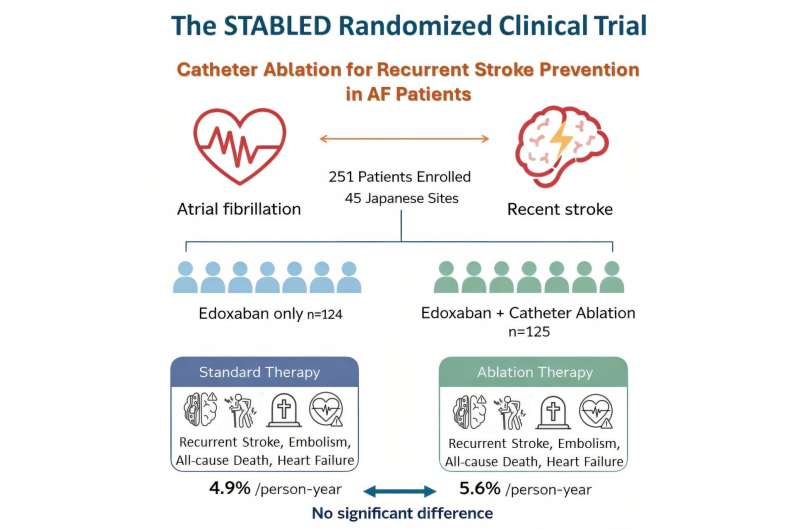
Schematic overview of the nationwide STABLED randomized clinical trial comparing standard anticoagulant therapy alone with anticoagulant therapy plus catheter ablation in patients with atrial fibrillation who had recently experienced stroke. Credit: Kumamoto University
A nationwide clinical RCT trial led by Dr. Kazumi Kimura at Kumamoto University Hospital has found that adding catheter ablation to standard anticoagulant therapy did not significantly reduce the risk of recurrent stroke or major cardiovascular events in patients with atrial fibrillation who had recently experienced a stroke. The study was conducted through a nationwide collaboration involving multiple academic institutions and clinical partners across Japan, including Nippon Medical School and the University of Fukui, and the results arepublishedinJAMA Neurology.
Atrial fibrillation is the most common type of cardiac arrhythmia and is a major cause of ischemic stroke. Althoughdirect oral anticoagulantshave reduced stroke incidence, patients with a prior stroke remain at particularly high risk of recurrence, with annual rates reported at 7%–10%. Identifying strategies to further lower this risk is therefore a major challenge in both neurology and cardiology.
To address this clinical question, the Stroke Secondary Prevention With Catheter Ablation and Edoxaban (STABLED) randomized clinical trial enrolled 251 patients across 45 medical institutions throughout Japan. Participants were randomly assigned to receive standard therapy with the oral anticoagulant (edoxaban) alone or in combination with catheter ablation, an established procedure that aims to restore normal heart rhythm by eliminating abnormal electrical pathways.
After amedian follow-upperiod of more than three years, researchers found no statistically significant difference in the primary composite outcome between the two groups. Event rates were 4.9% per person-year in the standard-therapy group and 5.6% per person-year in the ablation group.
The findings suggest that routine addition of catheter ablation to anticoagulant therapy may not provide a clear clinical advantage for secondary stroke prevention in this high-risk population. However, the investigators note thatoverall event rateswere lower than expected, meaning the study may have been underpowered to detect smaller but clinically meaningful differences. Further research is needed to clarify whether advances in ablation technology or patient selection could improve outcomes.
Publication details Kazumi Kimura et al, Catheter Ablation and Oral Anticoagulation for Secondary Stroke Prevention in Atrial Fibrillation, JAMA Neurology (2026). DOI: 10.1001/jamaneurol.2026.0155 Journal information: Archives of Neurology










Post comments