



































byUniversity of Texas at El Paso
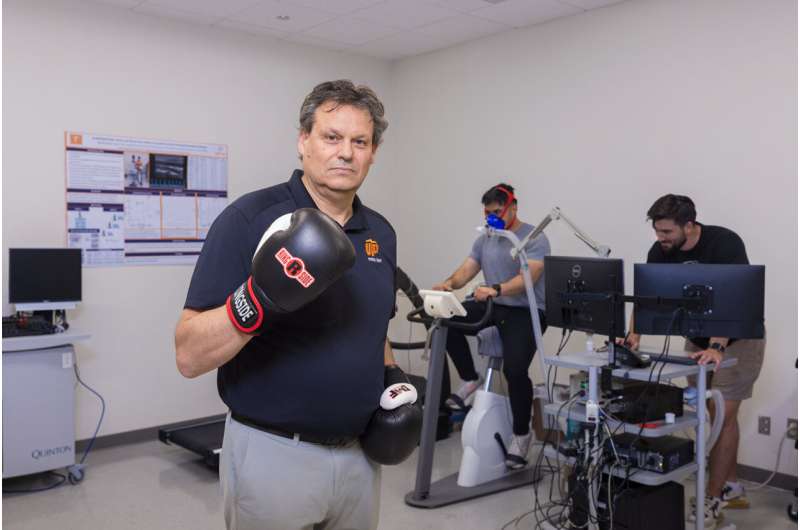
Alvaro Gurovich, Ph.D., professor and chair of the Department of Physical Therapy and Movement Sciences at The University of Texas at El Paso, is the senior author of a study that examined the effects of a six-week boxing training program on blood pressure and blood vessel function in young adults with elevated blood pressure or Stage 1 hypertension. The research team found the program led to reductions in participants' blood pressure comparable to or greater than those achieved by medication. Credit: The University of Texas at El Paso.
A study from researchers at The University of Texas at El Paso shows that just six weeks of boxing training can significantly reduce blood pressure and improve blood vessel function in young adults with elevated blood pressure or Stage 1 hypertension. The study,publishedin the peer-reviewed journalSports, is the first randomized controlled trial to evaluate the effects of boxing training on cardiovascular and vascular health in this population, the team said.
"Hypertension is a primary contributor to heart disease, stroke and premature death, and many young adults who are in the early stages of the condition are not aware that they have it," said Alvaro Gurovich, Ph.D., professor and chair of the UTEP Department of Physical Therapy and Movement Sciences, and senior author of the study. "These findings could reshape how clinicians approach one of the world's most prevalent cardiovascular risk factors."
Twenty-four participants, all with an approximate age of 25, were randomly assigned to either a boxing training group or a control group. Over six weeks, the boxing group completed three sessions per week, each consisting of 10 three-minute rounds of exercise on a heavy bag or with mitt work, interspersed with one-minute rest periods. The control group performed flexibility and balance exercises on the same schedule.
By the end of the six-week training, participants in the boxing group saw theirsystolic blood pressuredrop by an average of 16 millimeters of mercury (mmHg) and their diastolic blood pressure fall by 10 mmHg—reductions that are comparable to or greater than those typically achieved through medication, the team said. Thecentral systolic blood pressure, a measure considered more predictive of cardiovascular risk than standard arm-cuff readings, also fell significantly.
Systolic blood pressure measures artery pressure when the heart contracts to pump blood, while diastolic pressure measures pressure when the heart rests between beats. Individuals with a systolic pressure of less than 120 mmHg and a diastolic pressure of less than 80 mmHg are considered to have normal blood pressure. Stage 1 hypertension refers to readings of 130 to 139 mmHg systolic and 80 to 89 mmHg diastolic.
"This research exemplifies the kind of applied, patient-centered science that defines our college," said Scott Kruse, Ph.D., dean of the UTEP College of Health Sciences. "Dr. Gurovich and his colleagues have produced evidence with real clinical relevance, demonstrating that an accessible, engaging form of exercise can move the needle on a condition that affects millions of people."
Beyond blood pressure, the boxing group showed meaningful improvements inendothelial function, which is the ability of blood vessel walls to regulate blood flow, in both the arms and the legs.
"What we're showing is that boxing training is not just a fun workout; it can actually change how your blood vessels work," said Gurovich. "After just six weeks, the blood vessels of our participants were more flexible, more responsive and carrying more blood. That directly translates into a lower risk of heart attack and stroke. For young people who are already on a path toward hypertension, this could be a powerful and sustainable alternative to starting a lifetime of medication."
The authors also noted that future studies should examine whether these benefits extend to older populations and to individuals who take up boxing outside a controlled training program like the one used in the study.
More information Francisco Morales-Acuna et al, Six Weeks of Boxing Training Lowers Blood Pressure and Improves Vascular Function in Young Men and Women with Elevated Blood Pressure or Stage 1 Hypertension, Sports (2026). DOI: 10.3390/sports14010005










Post comments