




































byTechnical University Munich
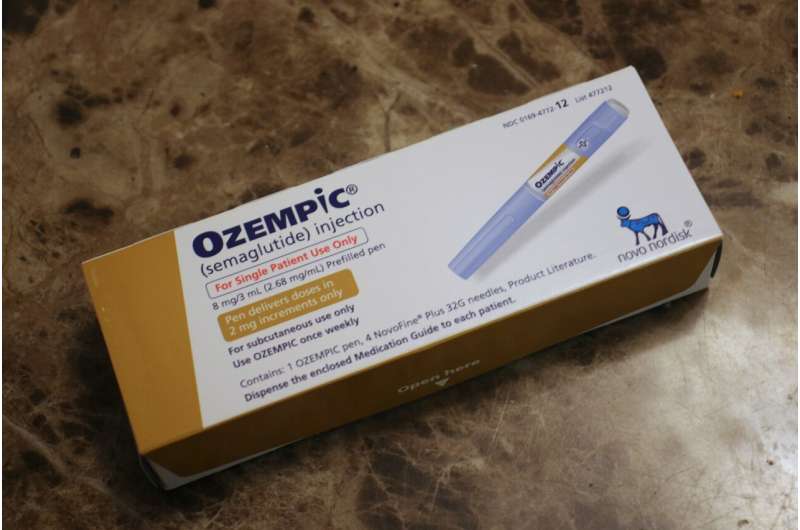
Credit: Unsplash/CC0 Public Domain
Injectable weight-loss drugs can reduce the risk of serious cardiovascular events for people with type 2 diabetes. Researchers at the Technical University of Munich (TUM) and Harvard Medical School have demonstrated this result using insurance claims data. They found that semaglutide and tirzepatide—marketed as Ozempic and Mounjaro—reduced the risk of serious cardiovascular events by up to 18%.
The study,publishedinNature Medicine, analyzed a large dataset from U.S. health insurers.
"Those data are collected in routine clinical care and can be used for research. They allow us to answer a broad range of relevant questions efficiently. Importantly, we are studying patients who reflect everyday clinical practice—unlike the highly selected participants typically enrolled in randomized trials," says Dr. Nils Krüger, first author of the study and aresident physicianat the Department of Cardiovascular Diseases at the TUM University Hospital German Heart Center.
The study demonstrates clear cardiovascular benefits for high-risk patients with type 2 diabetes. Compared with sitagliptin, adiabetes drugshown in previous studies to have no cardiovascular benefit, semaglutide reduced the risk of stroke andheart attackby 18%. Tirzepatide lowered the combined risk of stroke, heart attack, and death by 13% compared to dulaglutide, a GLP-1 drug that has been in clinical use for several years.
"Both substances have a cardioprotective effect. Our data show that the benefits emerge from early on, indicating that the effect goes beyondweight lossalone," says Dr. Krüger. The exact mechanisms driving this protective effect are still unclear.
As the two GLP-1 drugs have only been available for a short time, there has been a lack of studies demonstrating cardiovascular benefits in addition to weight loss—especially those directly comparing tirzepatide and semaglutide.
According to the researchers, such comparative data are urgently needed to better protect at-risk patients. The interdisciplinary team led by Dr. Krüger at TUM University Hospital German Heart Center, Harvard Medical School and Brigham and Women's Hospital aims to close this evidence gap.
"According to the manufacturers' claims, each one suggests its own product is more effective than the competitor's at reducing cardiovascular risk," says Prof. Heribert Schunkert, Director of the Department of Cardiovascular Diseases at TUM University Hospital. "Our study, however, shows only small differences in heart outcomes between tirzepatide and semaglutide in the risk groups we analyzed."
Dr. Krüger adds, "We hope our findings will provide clarity to physicians about how these new medications perform inclinical practice. Our transparent study design is also intended to support open scientific discussion about whether and how modern GLP-1 drugs should become part of the standard therapeutic repertoire in cardiovascular medicine."
More information: Nils Krüger et al, Cardiovascular outcomes of semaglutide and tirzepatide for patients with type 2 diabetes in clinical practice, Nature Medicine (2025). DOI: 10.1038/s41591-025-04102-x Journal information: Nature Medicine
Provided by Technical University Munich










Post comments