
































byAmerican Heart Association
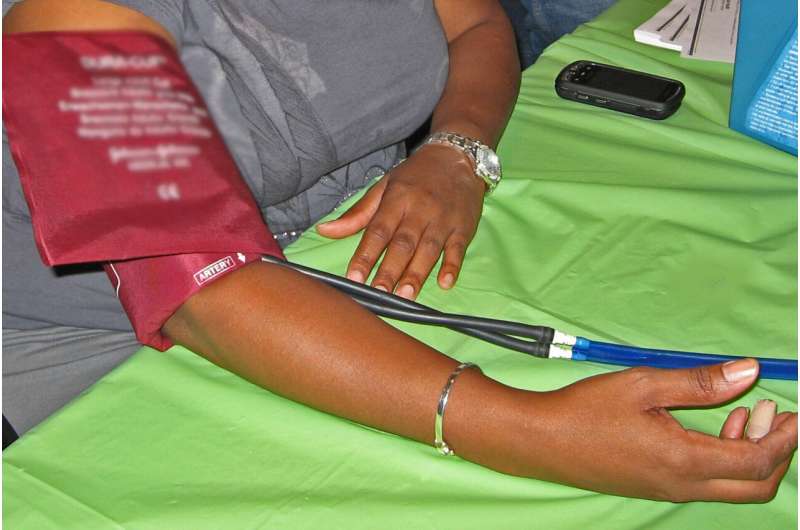
Checking blood pressure using cuff. Credit: American Heart Association
People with high blood pressure were twice as likely to take their blood pressure medication regularly when offered daily chances to win cash rewards, yet they did not achieve better blood pressure measurements compared to people who were not offered financial rewards, according to a preliminary late-breaking science presentation today at the American Heart Association'sScientific Sessions 2025. The meeting, held Nov. 7–10 in New Orleans, is a premier global exchange of the latest scientific advancements, research and evidence-based clinical practice updates in cardiovascular science. The paper was accepted forpublicationinJACC.
The Behavioral Economics Trial To Enhance Regulation of Blood Pressure (BETTER-BP) study included 400 adults with high blood pressure who received care at three community health clinics in New York City. These clinics provide health care mainly to people with Medicaid coverage (who arelow-incomeor disabled) and people without health insurance. Both groups often have higher rates of uncontrolled blood pressure and are less likely to consistently take their blood pressure medication, according to prior studies. Not taking blood pressure medication as directed can increase the risk of heart attack and stroke, according to the American Heart Association.
The participants were randomly assigned to one of two groups: 1) two-thirds were eligible to win cash rewards for taking their blood pressure medication, and 2) one-third were in acontrol groupthat was not offered the chance to win cash for taking their blood pressure medication. All of the participants self-reported that they did not take their blood pressure medication as prescribed before the study began.
Researchers used electronic pill bottles to monitor how often participants opened their medication bottles during the study period (as a measure of daily medication use), rather than relying on patients self-reporting this information. The average systolic blood pressure (the top number) among all participants was 139 mm Hg at the time of enrollment in the study. (Normal systolic blood pressure is less than 120 mm Hg, according to the American Heart Association's2025 High Blood Pressure Guideline.)
"We're always looking for ways to improve medication adherence among our patients with heart disease, and high blood pressure is one of the most preventable risk factors forheart disease," said John Dodson, M.D., principal investigator of the study and associate professor of medicine and population health at the NYU Grossman School of Medicine in New York City.
Participants in the rewards group were entered into a daily drawing for a cash reward ranging from $5-$50 if they had opened their pill bottle the previous day (indicating that they had taken their blood pressure medication). They received daily text messages informing them if they had won any money. In addition, people who did not open their medication bottle (indicating they had skipped their previous day's dose) received a text message from the study app reminding them they could have potentially won acash rewardif they had taken their medication the previous day. People in the control group did not receive any text messages and were not eligible to win any cash rewards.
The study monitored participants for 12 months total: six months of the rewards program followed by six months of additional monitoring without rewards to look for changes in medication-taking habits after thefinancial incentivesended.
The study's key findings include:
"Financial incentives clearly worked to change behavior during the study period because people in the rewards group took their medication much more consistently. However, we were surprised that thebehavior changedidn't translate to significantly better blood pressure control," Dodson said. "It is unclear if there was no change because they opened the bottles but didn't take the medication tracked, or if a different medication or lifestyle behavior not tracked in the study impacted their blood pressure."
"We were also surprised that people did not keep taking their medication as prescribed after the rewards program ended. This shows that improving medication adherence is more complex than we thought. There are still many unknown factors we need to understand in order to help people adopt long-term behavior changes," he added.
The study had several limitations. The electronic pill bottles only monitored whether the bottles were opened, not whether the participants actually took the medication. Researchers monitored only one blood pressure medication per participant, even though many participants were prescribed multiple medications for high blood pressure. The study also used standardized office blood pressure measurements taken at three points during the trial (at enrollment, after six months and at 12 months, six months after the end of the rewards program), rather than more frequent home monitoring, which may have yielded different results.
Study details, background and design:
Provided by American Heart Association







Post comments