




































by Nadine Berger,Johannes Gutenberg University Mainz
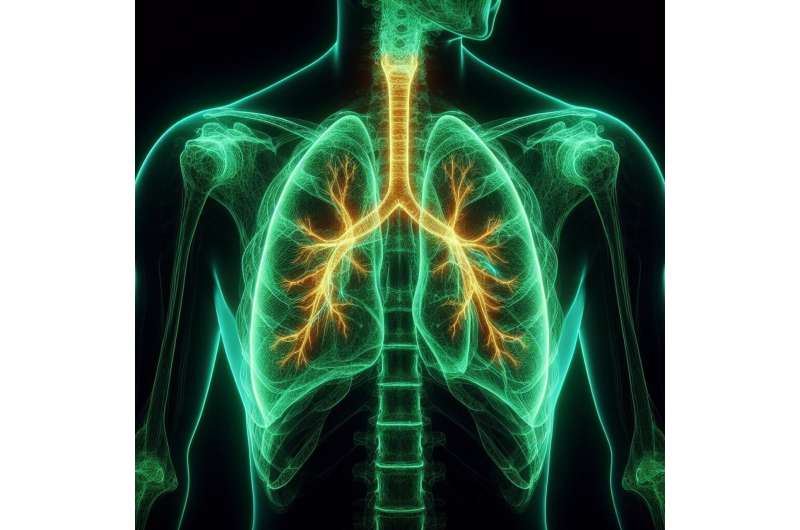
Credit: Pixabay/CC0 Public Domain
An acute pulmonary embolism occurs when a blood clot blocks one or more vessels in the lung. In patients at moderate or high risk, the blockage can impair the heart's ability to pump blood through the lungs to such an extent that it becomes life-threatening. About 15% of those affected die as a result of acute pulmonary embolism. Blood-clot-dissolving medications, known as thrombolytics, can effectively dissolve vascular blockages. However, they increase the risk of severe bleeding, particularly in the brain. For this reason, they are generally used only in the most severe cases.
An international team led by Univ. Prof. Dr. Stavros Konstantinides, Medical Director of the Center for Thrombosis and Hemostasis (CTH) at University Medical Center Mainz, researched the clinical efficacy and safety of an alternative treatment method in the HI-PEITHO (Higher-Risk Pulmonary Embolism Thrombolysis) study and compared it with the current standard therapy for acute pulmonary embolism. The work ispublishedin theNew England Journal of Medicine.
The method under investigation is highly targeted: a thin tube, the catheter, is guided through a vein in the groin into the lung. This allows the thrombolytic drug to be delivered directly into the blood clot. Additionally, the procedure uses ultrasound energy to accelerate the breakdown of the clot. This reduces treatment time and lowers the required dose of thrombolytic agents.
"The HI-PEITHO study is the largest to date and the first of its kind in the field of pulmonary embolism. It shows that a catheter-based procedure can be effective and can improve the prognosis for certain patients with severe pulmonary embolism while carrying a low risk of bleeding complications," says Professor Konstantinides. The multicenter study included 544 adult patients with acute pulmonary embolism and a moderate to high risk of complications from Germany, seven other European countries, and the United States. While one group receivedultrasound-facilitated, catheter-directed fibrinolysis in addition to standard therapy with blood-thinning medications, known as anticoagulants, the control group was treated with anticoagulants only.
Within the first seven days after treatment, mortality or life-threatening cardiovascular collapse occurred in 4% of the catheter group and 10.3% of the control group. This corresponds to a significant61% reductionin the study's primary endpoint following ultrasound-guided, catheter-directed treatment. Serious complications were rare overall, and cerebral hemorrhages were not observed in either group.
The HI-PEITHO study was initiated and co-led scientifically by the University Medical Center Mainz. It was conducted in partnership with the Pulmonary Embolism Response Team (PERT) Consortium in the United States and the study sponsor Boston Scientific.
Publication details Kenneth Rosenfield et al, Ultrasound-Facilitated, Catheter-Directed Fibrinolysis for Acute Pulmonary Embolism, New England Journal of Medicine (2026). DOI: 10.1056/nejmoa2516567 Journal information: New England Journal of Medicine










Post comments