




































byRockefeller University Press
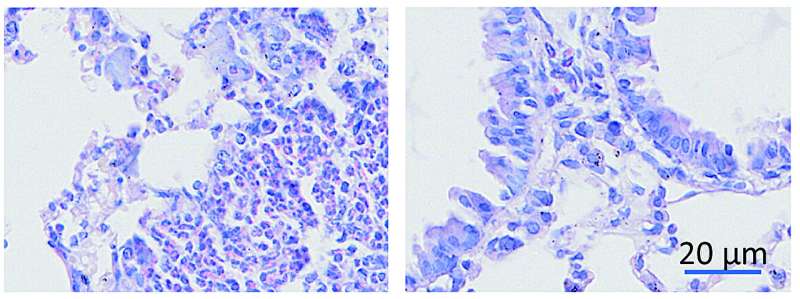
Treatment with KQS-1 (right) significantly reduces the amount of inflammation observed in tissue samples taken from asthmatic mice in comparison to untreated controls (left). Credit:Life Science Alliance(2026). DOI: 10.26508/lsa.202503552
A collaborative effort among researchers at the Henan Academy of Innovations in Medical Science, Zhengzhou University, and Shenzhen University School of Medicine has provided the first proof-of-principle study demonstrating that targeting a receptor on the surface of anti-inflammatory regulatory T cells (Tregs) can restore their function and alleviate asthma in mice.
The study,publishedinLife Science Alliance, shows that targeting theDectin-1 receptorreprograms the epigenetic landscape of compromised Tregs and renews their ability to express two core Treg genes. These findings offer a promising novel therapeutic avenue for the treatment of allergic asthma, and—potentially—other immune-mediated diseases.
Allergic asthma is a chronic inflammatory disease of the airway characterized by a complex immune response to inhaled allergens, resulting in bronchial hyperreactivity, excessive mucus secretion, and—ultimately—structural remodeling of the airway. This pathophysiology has traditionally been attributed to an imbalance between pro-inflammatory immune cells and their anti-inflammatory counterparts, Tregs. As such, the loss of Treg function is thought to be a cornerstone of allergic asthma pathogenesis. However, the molecular changes driving Treg impairment remain poorly understood.
One emerging hypothesis suggests that Treg dysfunction in allergic asthma may be caused by the induction of a senescence-like phenotype, in which Tregs appear to enter a dormant state. Several studies have shown thatchronic inflammatory environmentscan promote this dormancy in T cells, but this state may not be permanent. Recent work has found that certain stimuli can induce metabolic and epigenetic changes to "reawaken" the cells, thereby enhancing their functionality. Indeed, Tregs express a cell surface receptor protein called Dectin-1 that can respond to such stimuli.
"This raises the intriguing possibility of harnessing such pathways to durably 're-educate' and restore core functional pathways of dysfunctional immune cells like Tregs," says Pingchang Yang, co-senior author of the new study.
Using human Tregs taken from allergic asthmatic patients, Li's team confirmed that these cells not only showed the hallmarks of senescence but also demonstrated a profound loss of two key Treg proteins, the master transcription factor FOXP3 and the immune signaling molecule IL-10. These findings establish a novel mechanism of Treg functional failure, and a potential avenue for therapeutic intervention.
"We think that this defect can be reversed through targeted engagement of the Dectin-1 pathway, leading to epigenetic reprogramming of FOXP3 and IL10 and sustained restoration of FOXP3- and IL-10-dependent immunoregulatory capacity," says co-senior author Liguo Li.
The researchers used a small peptide, KQS-1, to engage the Dectin-1 receptor, epigenetically activating the FOXP3 and IL10 genes. This resulted in increased FOXP3 and IL-10 protein expression.
"This phenomenon manifests as stable transcriptional upregulation of FOXP3 and IL10, leading to long-lasting restoration of immunoregulatory capacity even after KQS-1 removal in vitro," says Li.
KQS-1 treatment also reduced airway inflammation in a mouse model of asthma, offering proof-of-principle evidence for targeting of Treg function in vivo. "The core finding of our work is that the natural compound KQS-1 can effectively 're-educate' these dysfunctional Tregs," Yang says, adding, "This strategy offers a promising and novel therapeutic avenue for the treatment of allergic asthma and potentially other immune-mediated diseases characterized by Treg dysfunction."
More information Xiangdong Sun et al, Dectin-1 epigenetic reprogramming rescues senescent-like Treg function in allergic asthma, Life Science Alliance (2026). DOI: 10.26508/lsa.202503552







Post comments