



































by Eef Hogervorst,The Conversation
Credit: Unsplash/CC0 Public Domain
A new study suggests that even low levels of physical activity could protect the brain from Alzheimer's disease—but not in the way scientists expected.
Theresearcherstracked almost 300older adultswith early brain signs of Alzheimer's for nine to 11 years using pedometers. They found that physical activity didn't reduce the toxic amyloid plaques that most Alzheimer'streatmentsnow target.
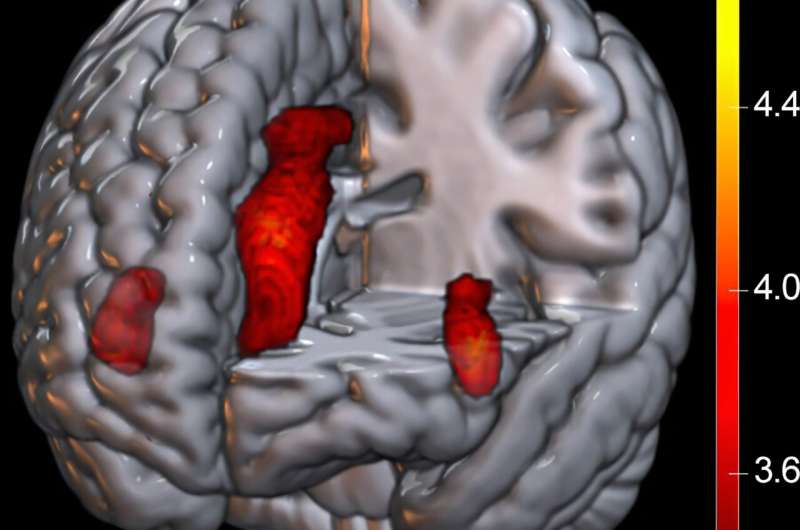
Instead, in people who already had these plaques, physical activity reduced the accumulation of misfolded tau proteins in specific brain areas. These proteins appear later in Alzheimer's disease and are more closely linked to cognitive and functional decline. These signs of dementia were reduced by almost half in moreactive participants.
Benefits appeared at just 3,000 steps—roughly half an hour of walking at a moderate pace. The optimal range was 5,000 to 7,500 steps daily, after which the effect plateaued. More steps didn't necessarily mean greater protection, which suggests a realistic target for older,sedentary people, rather than theoften-cited 10,000 steps.
The study had limitations, however. It involved a fairly small group of mostly white, well-educated people in the US, and it didn't take other lifestyle or health factors into account. Also, there may be other protective mechanisms of walking at play. But it does support other research suggesting that being physically active may lower the risk of dementia.
A UKstudyof 1,139 people over 50 found that those who were moderately to vigorously active had a 34–50% reduction in dementia risk when followed over eight to ten years. Among those who developed dementia, staying active reduced their memory decline, particularly in older women.
A larger 2022 UKstudytracked 78,430 people for seven years using wrist accelerometers. It found a 25% reduction in dementia risk with just 3,800 steps daily, rising to 50% at 9,800 steps.
However, people who walked more also had better cardiovascular health—lower cholesterol, better sleep andblood pressureand reduced diabetes risk. Since these heart and strokerisk factorsalso increase dementia risk, the picture is complex.
Healthy habits oftengo together. People who exercise are more likely to eat well, not smoke, look after their heart health and have fewer financial stresses. This makes it hard to know which factor is having the biggest effect. The researchers tried to account for this, but because these habits are so closely linked, it's difficult to say that exercise alone is responsible.
However, there is a strong case for this as there are multiple ways exercise might support the brain: improving cardiovascular health, increasing blood flow and boosting chemicals that promote brain-cell connections.
One such substance isirisin, a hormone produced by muscles that acts on almost all faulty brain mechanisms associated with Alzheimer's, including inflammation. This and other chemicals, such as BDNF, associated with exercise, provide plausible biological pathways for how physical activity might directly influence brain health beyond its cardiovascular benefits.
But the relationship might work in reverse, too. People may become less active because of early Alzheimer's symptoms. Those with hearing problems, for instance—itself a dementia risk factor—oftenreportbarriers that make them stop being activebeforeother dementia symptoms appear.
Reduced activity thenaccelerates memory decline. This creates a vicious circle. Early disease symptoms—such as not hearing—can affectself-esteemand reduce engagement in physical activity, which in turn worsens cognitive decline.
Brisk walking might be particularly beneficial. A small trial of 15 people with mild to moderate Alzheimer's who did Nordicwalking(an enhanced walking technique that uses poles to work your upper body as well as your legs) maintained brain function over 24 weeks, with some functions evenimproving.
The 15 who received only standard care showed decline or no improvement. Though small, the trial suggests that even people already diagnosed with Alzheimer's might benefit from increased physical activity, includingbrisk walking.
Getting outside, particularly innature, may be especially beneficial for preventingdementia—possibly because it improves mood and sleep while reducing isolation—alldementiarisk factors. The combination of physical movement,natural light exposureandsocial interactionwhen walking outdoors may create multiple protective effects that complement each other.
The challenge now is helping people overcome barriers to outdoor activity, such as safety concerns, fear of falling, or simply preferring the comfort of the sofa—particularly during wetter, colder months. But the evidence suggests that even a few minutes of walking could make a difference, and that modest, achievable targets—a half-hour stroll rather than a marathon training regime—may offer substantial protection against cognitive decline.
This article is republished fromThe Conversationunder a Creative Commons license. Read theoriginal article.
Provided by The Conversation









Post comments